


Jewelry as an Accent13 pieces
Jewelry
From minimalist author pieces to heirloom family treasures.
Amber
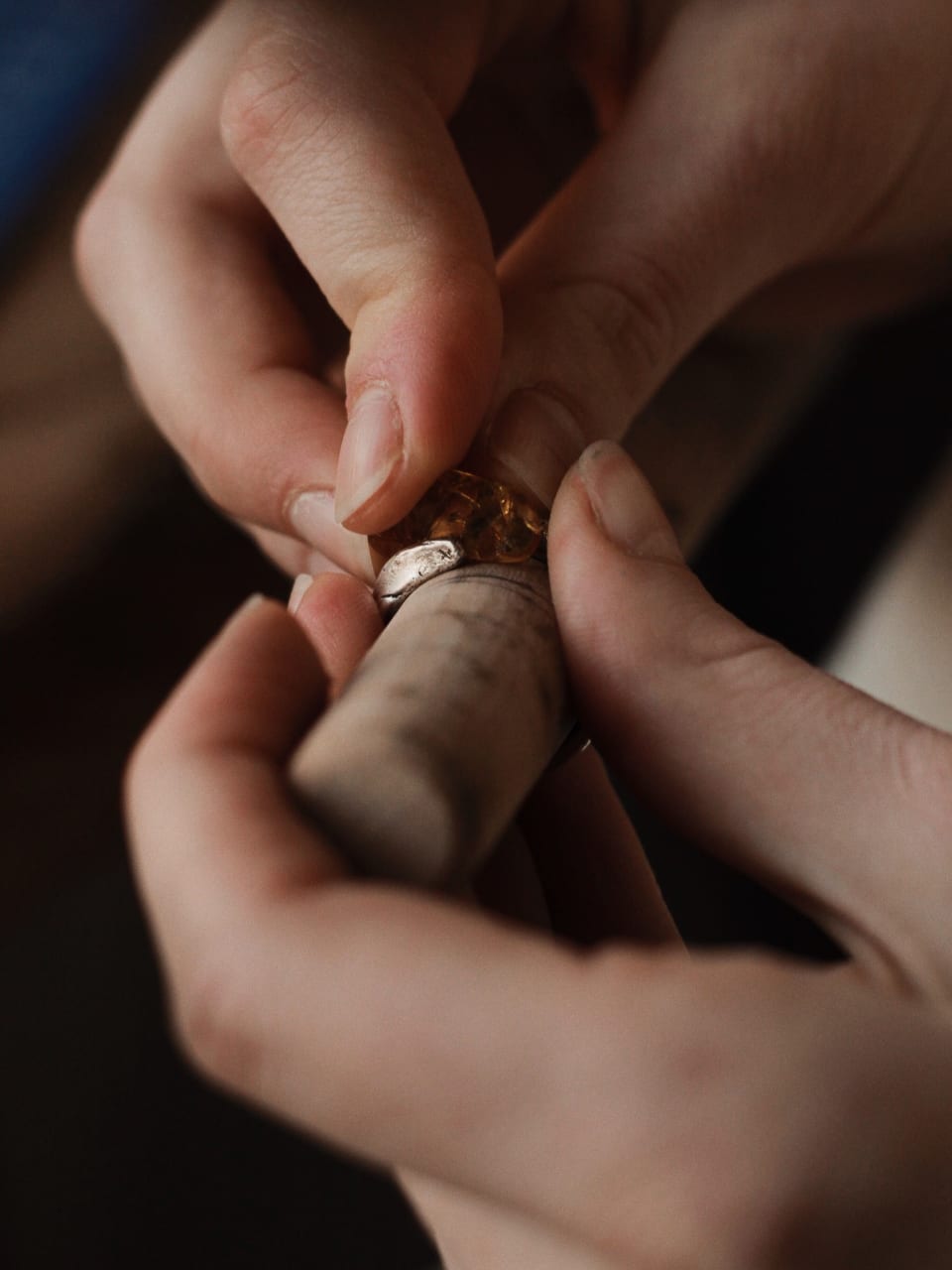
Amber is not a stone but the fossilised resin of ancient coniferous or flowering trees, tens of millions of years old; sometimes insects or plants of those eras are frozen inside it. Ukraine is one of the amber capitals of the world: Volyn-Polissia amber (Rivne, Volyn) has long been prized for its warm honey colour and lightness. In folk tradition amber (an 'amber necklace') was worn as a talisman of health and, by belief, protection from illness. To the touch it is warm, light and becomes electrostatic when rubbed. Amber is worked gently, preserving its natural inclusions and shades — from light honey to dark cherry. It is an organic, 'living' gem with a deep connection to the Ukrainian land.
Amethyst
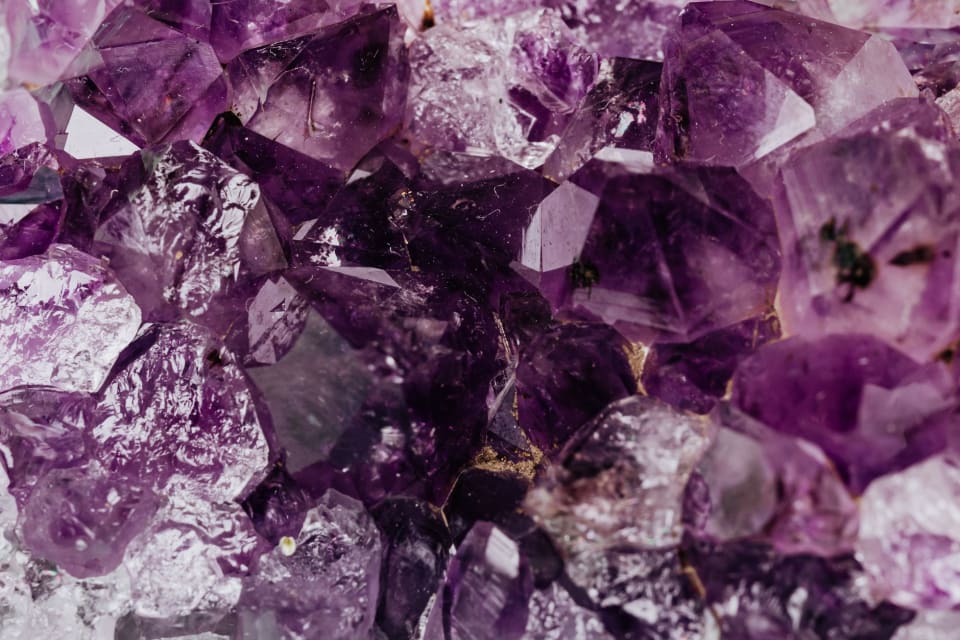
Amethyst is a semi-precious variety of quartz of a characteristic violet colour, from tender lilac to deep purple. Historically amethyst was a stone of kings and clergy, a symbol of power, wisdom and spiritual purity; its name comes from the Greek amethystos — 'not intoxicated', because the stone was believed to protect from drunkenness. Amethyst facets well, plays with light beautifully and has a noble, 'royal' hue. It is one of the most popular and affordable precious stones, and large, clear specimens are especially valuable. It combines beautifully with silver and gold. Amethyst is a semi-precious stone of noble violet colour, in which an ancient symbolism of power, wisdom and purity combines with a deep, 'royal' hue that makes it one of the most beloved and expressive stones of the jeweller's art.
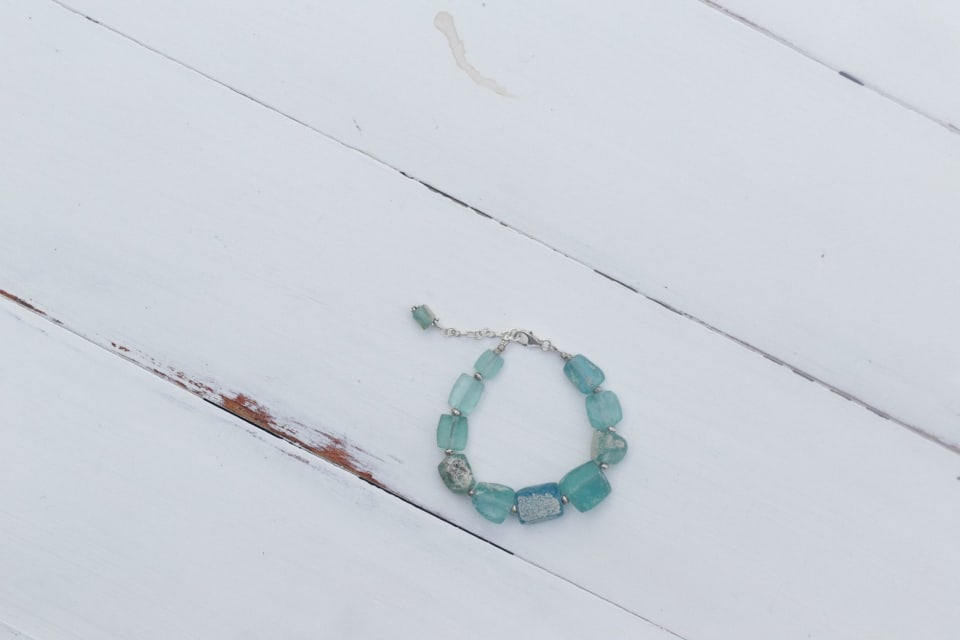
Aquamarine
Aquamarine is a transparent precious stone of a tender blue or greenish-blue colour, a variety of beryl (a relative of the emerald). Its name comes directly from the Latin aqua marina — 'sea water', which perfectly describes its transparent, fresh, wave-like hue. Historically aquamarine was considered a stone of sailors, giving protection on voyages and calm; it symbolises purity, youth and fidelity. The stone has fine transparency and a glassy lustre, facets well, and large clear specimens are especially valuable. Its tender colour makes jewellery fresh and elegant. Aquamarine is a transparent precious stone the colour of sea water, in which a fresh, tender blue combines with an ancient symbolism of the sea, purity and protection, giving jewellery a feeling of cool, crystalline and calm elegance.
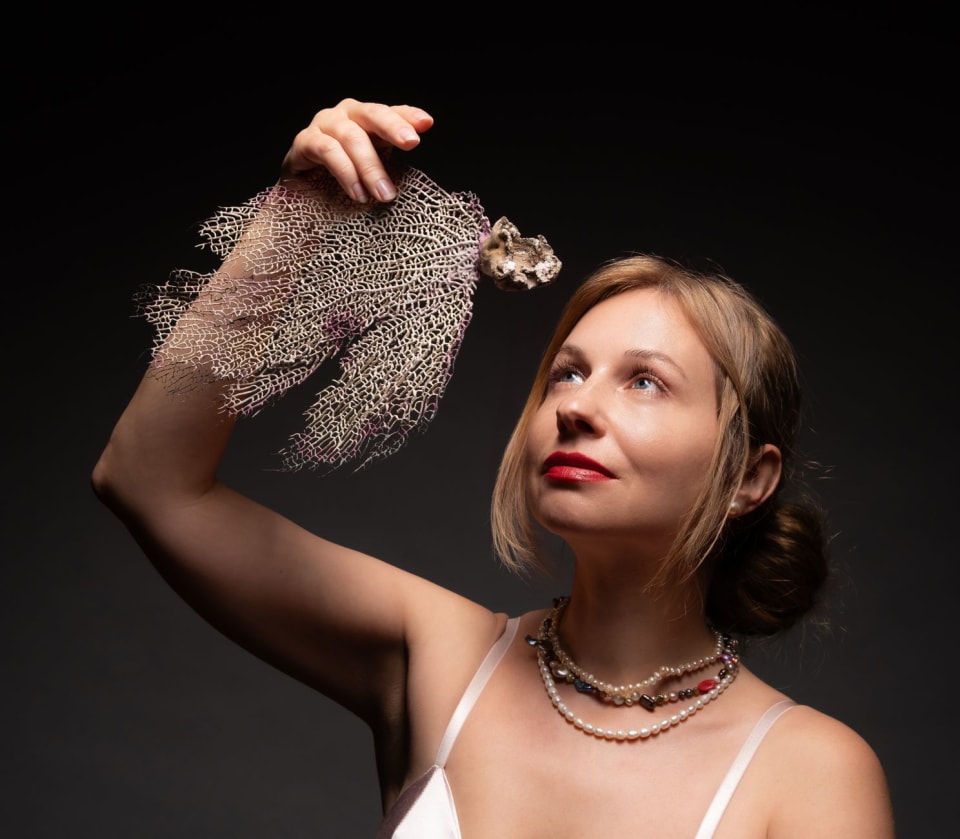
Coral
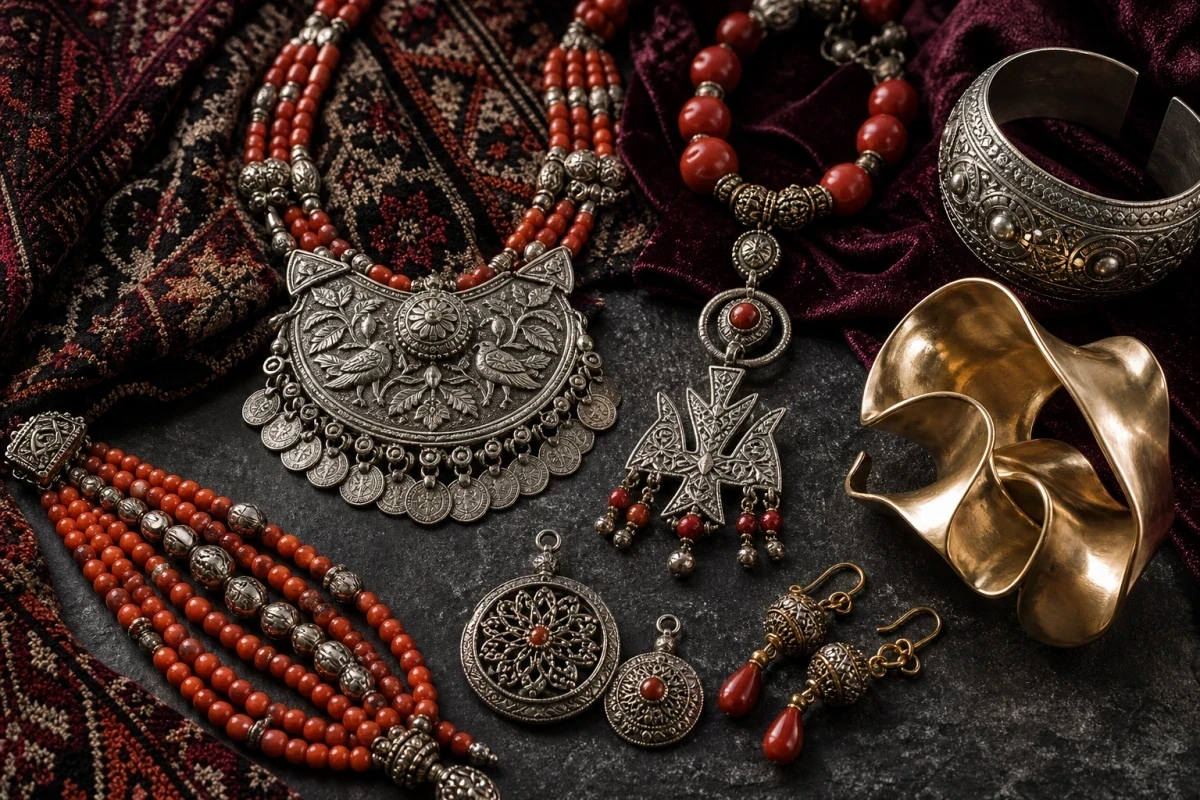
Coral is a jewellery material of organic origin, formed by the calcareous skeletons of marine coral polyps. Most prized is the noble red and pink coral of warm seas. Historically coral was one of the oldest talismans: it was worn for protection from evil and illness, especially by children. For Ukrainian culture red coral has a special meaning — it was precisely the coral necklace (korali) that was the most desired and expensive ornament, a mark of status and prosperity. Coral is not faceted but polished, emphasising its warm, living colour. Today, because of reef conservation, both vintage and ethical coral are valued. Coral is a jewellery material of organic, marine origin, in which a warm red colour combines with an ancient talismanic symbolism and a special meaning for the Ukrainian tradition of the necklace, making it an ornament with deep cultural roots.
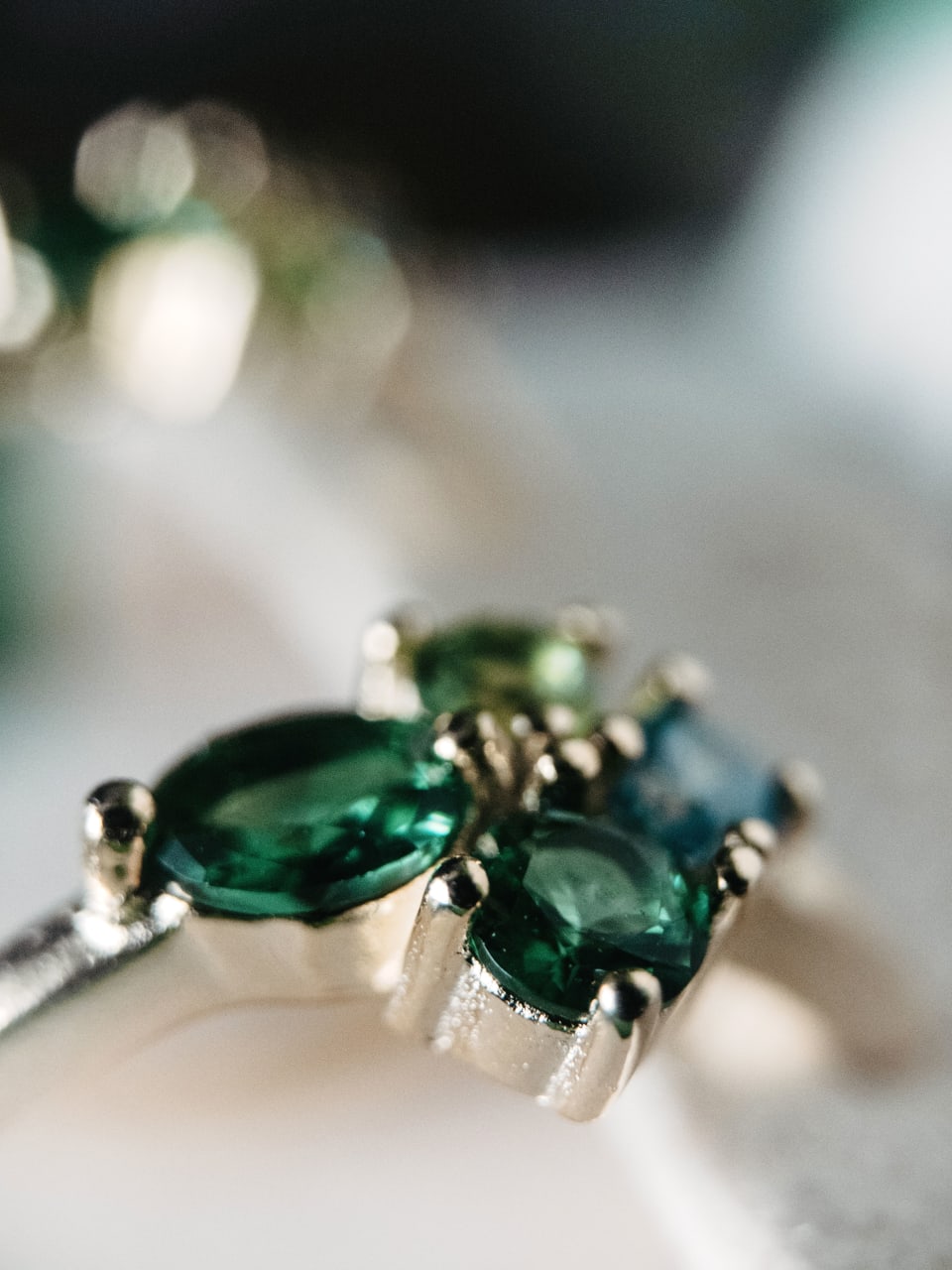
Emerald
The emerald is a precious variety of the mineral beryl of a deep green colour given by traces of chromium and vanadium. The emerald is one of the 'great' gems, sung of since antiquity; the emerald mines of Cleopatra were famous. Its green symbolised spring, rebirth, hope and eternal youth. Unlike the hard ruby and sapphire, the emerald is more fragile and almost always has natural internal 'inclusions' — the so-called 'jardin' (garden), which jewellers regard not as a flaw but as nature's 'fingerprint', a confirmation of authenticity. The most valuable stones have a pure grass-green tone. The emerald lends a look a rich, living and luxurious colour.
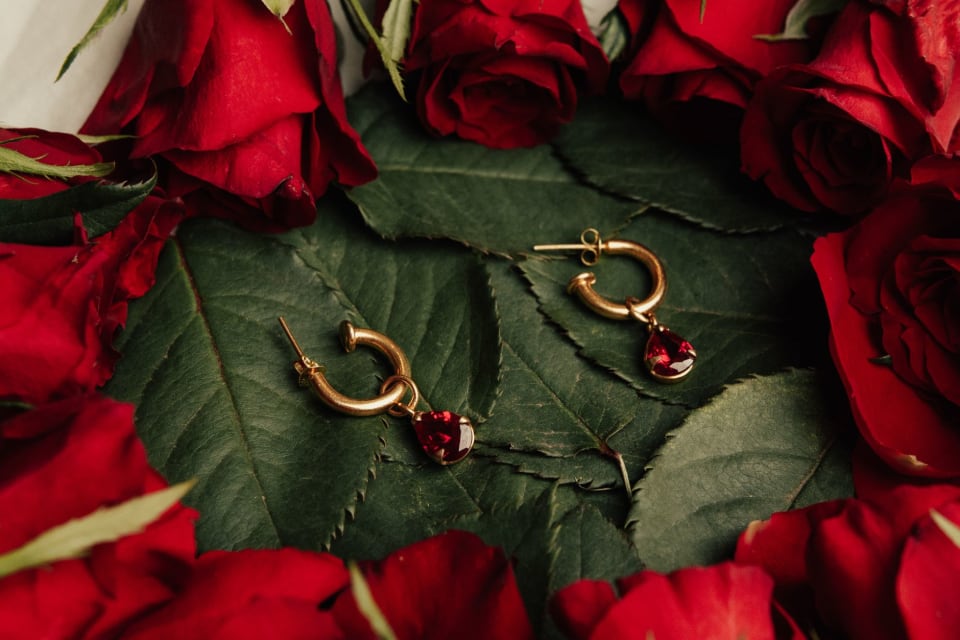
Garnet
Garnet is a semi-precious stone, most often of a deep, rich red colour (though green, orange and violet varieties also exist). The name comes from the Latin granatum — 'seed', because the small blood-red crystals of garnet resemble the seeds of the fruit. It is an ancient stone, worn as far back as antiquity and the Middle Ages as a symbol of fidelity, passion and protection on the road. Garnet facets well, plays with light beautifully and has a pleasant 'warm' depth of colour. Historically red garnet was popular in Victorian jewellery. It is more affordable than the ruby but no less striking. Garnet is a semi-precious stone of deep, 'wine' red colour, in which an ancient symbolism of passion and fidelity combines with a warm, rich hue that makes it a classic, striking yet affordable stone of jewellery.

Onyx
Onyx is a semi-precious stone, a variety of chalcedony, best known in deep black, though classic onyx is banded, with parallel black and white layers (and most 'black onyx' on the market is artificially coloured). Black onyx is valued for its matte or mirror-polished depth, elegance and severity. Historically onyx was used for carving cameos and seals, and was also considered a stone of protection, strength and self-command. In jewellery black onyx sounds dramatic and refined, contrasting beautifully with silver, gold and diamonds; it is popular in men's jewellery too (cufflinks, signet rings). Onyx is a semi-precious stone of deep black colour, in which a severe, elegant darkness combines with an ancient tradition of carving and a symbolism of strength, making it an expressive, dramatic and versatile stone of both women's and men's jewellery.

Opal
Opal is a unique semi-precious stone known for its inimitable 'play of colour' (often loosely called opalescence): inside the stone all the colours of the rainbow seem to flash and shimmer, changing depending on the angle of view and the light. This effect arises from the interference and diffraction of light by ordered microscopic silica spheres. Opals range from milky-white and black to fiery-orange; only precious opal shows play of colour, while common opal does not. The play-of-colour pattern differs from stone to stone. Historically the opal is surrounded by both fascination and superstition, but was always valued for its magical play of light. It is worked as a cabochon to emphasise the shimmer. Opal is a semi-precious stone of inimitable play of colour, in which a microstructure creates living, changing flashes of all the colours of the rainbow, making every stone unique and giving jewellery an almost magical, hypnotic beauty.
Pearl
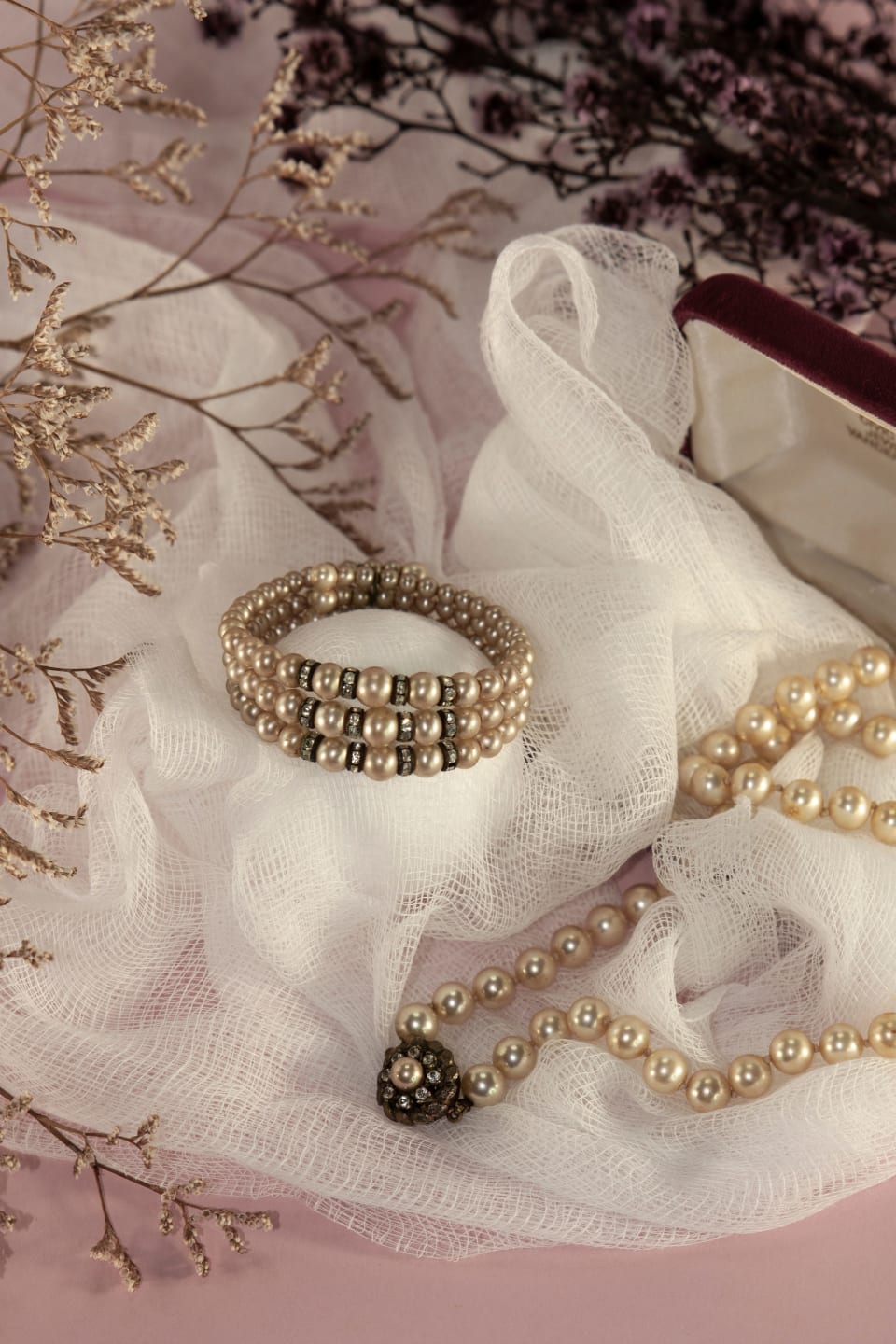
The pearl is a gem of organic origin, born inside a living mollusc: in response to an irritant, the shell wraps it layer by layer in nacre until a pearl forms. Natural pearls are rare and costly, so most modern ones are cultured (grown with human involvement). The pearl is prized for its soft, deep glow (the 'orient') and its tender shades — from white and cream to pink, gold and black (Tahitian pearls). For centuries pearls symbolised purity, nobility and femininity, worn by queens and aristocrats. Unlike hard stones, the pearl is soft and delicate: it fears acids, perfume and scratches, so it needs careful handling.
Ruby
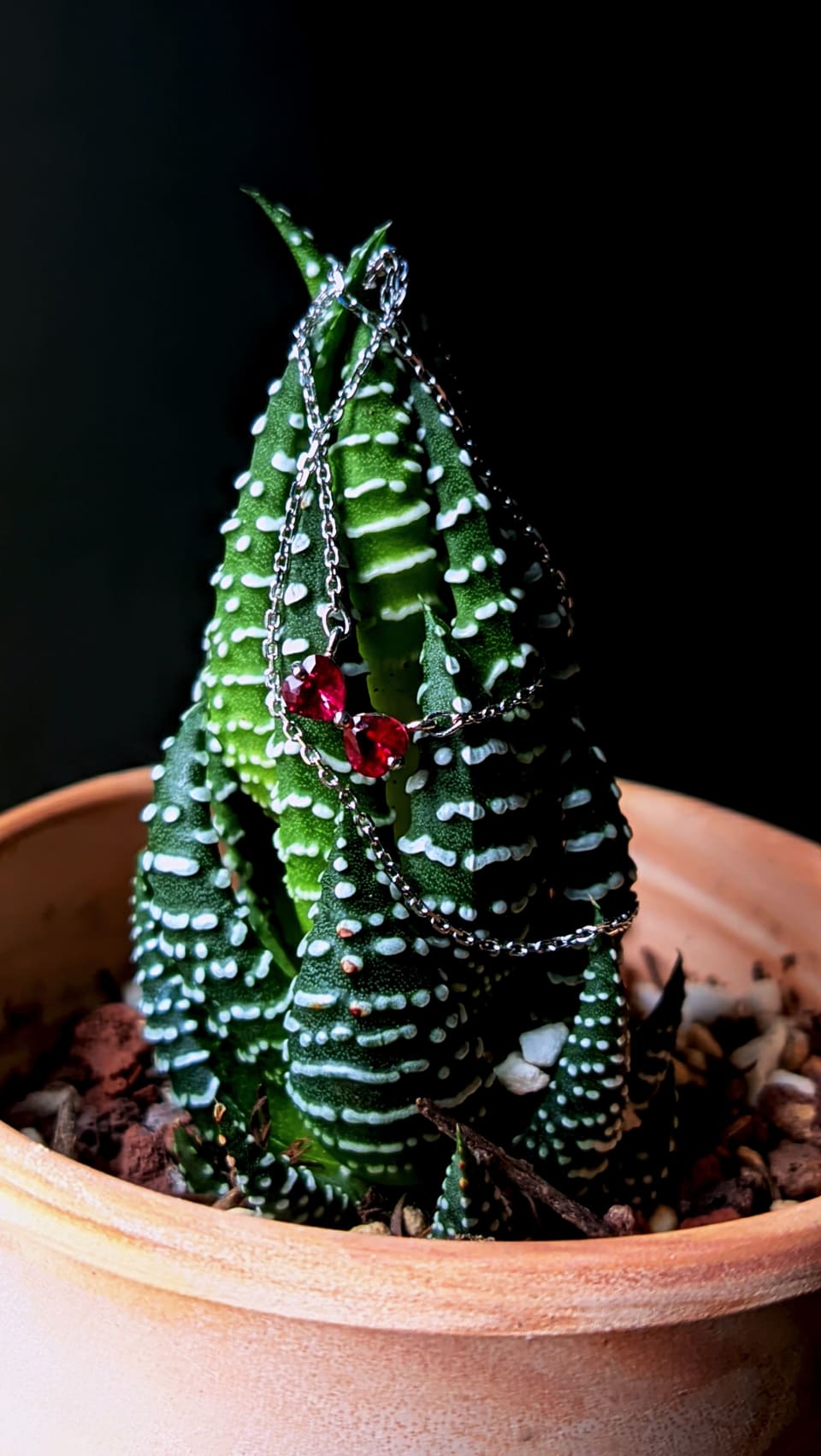
The ruby is one of the four 'great' precious stones (alongside the diamond, sapphire and emerald), a variety of the mineral corundum of a deep red colour given by a trace of chromium. The ruby is exceptionally hard (second only to diamond), and the most valuable stones have a saturated 'pigeon's blood' hue. For centuries the ruby symbolised passion, strength, power and protection, worn by monarchs and warriors as a talisman stone. In jewellery the ruby is prized for its fiery brilliance and rarity — large clean rubies cost more than diamonds of the same size. It is set in rings, necklaces and earrings when a deep, dramatic accent of colour is wanted.
Other Fashion Dimensions
Continue Exploring


Related sections




