



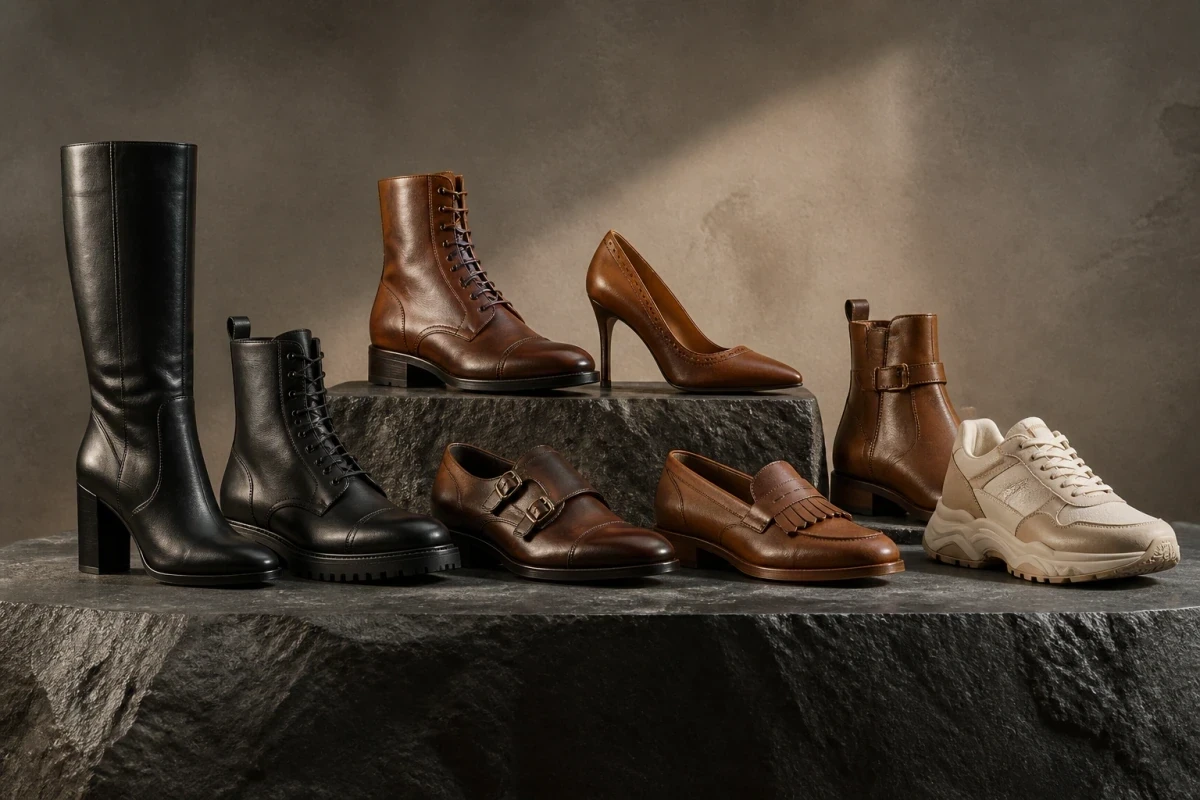
Style Starts at the Sole10 models
Footwear
From classic oxfords to modern handcrafted sneakers.
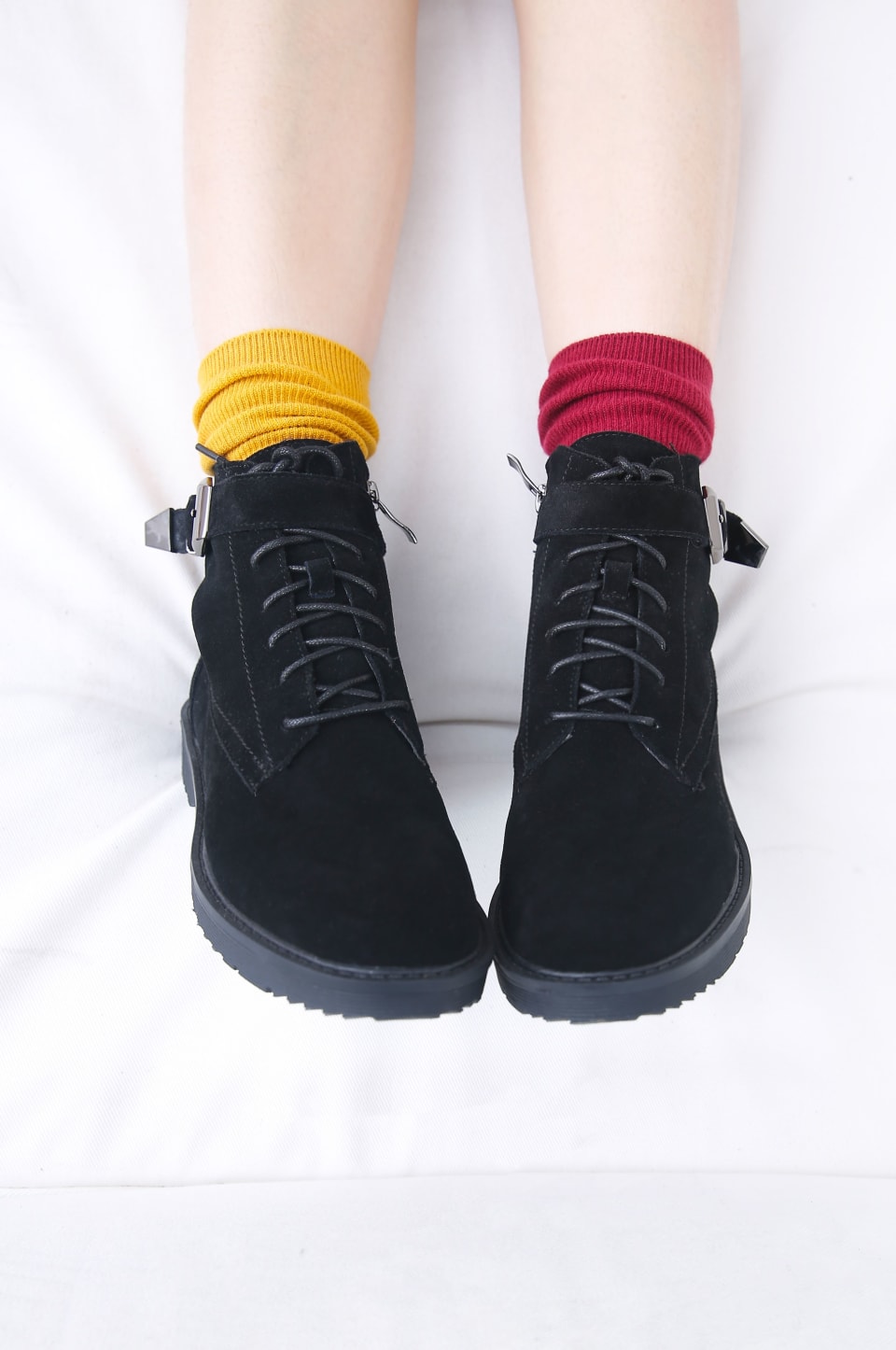
Ankle boots
Ankle boots are short boots whose shaft reaches the ankle or slightly above. It is one of the most versatile types of footwear: they combine the coverage and protection of boots with the lightness and compactness of shoes, so they suit almost everything — from dresses and skirts to jeans and trousers. Ankle boots come with any heel: stiletto, block heel, wedge or flat sole. Popular varieties are Chelsea (with elastic gussets), cowboy, zip-up or lace-up ankle boots. They work well in the between-seasons, when full boots are still too early and shoes are already cold. Ankle boots visually lengthen the leg, giving a look completeness and character. It is practical, stylish and incredibly flexible footwear that has deservedly become a staple of the modern wardrobe.
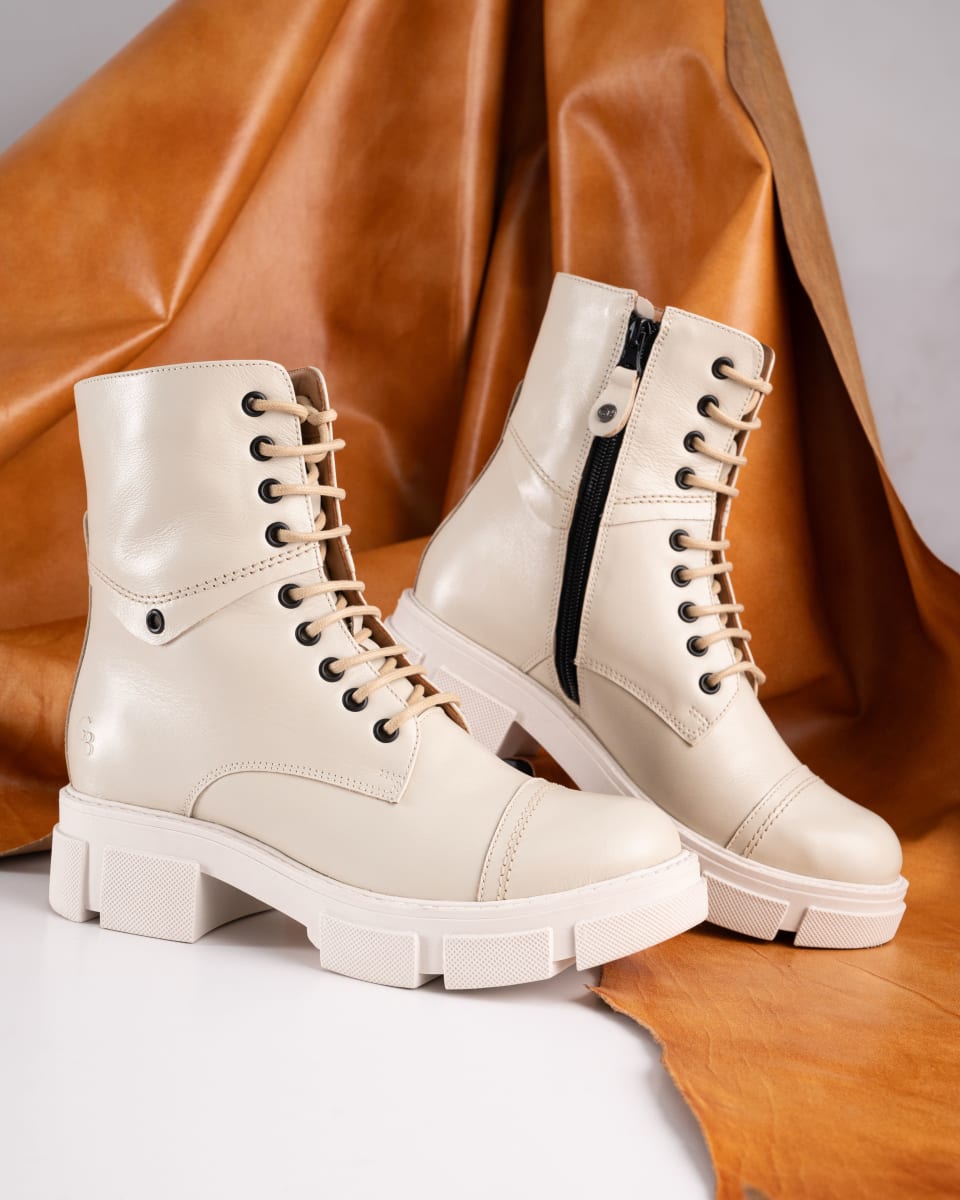
Boots
Boots are footwear with high shafts that cover the ankle, and often the shin or knee. It is one of the oldest and most functional types of footwear, born of the need to protect the legs from cold, damp and injury. Today boots are a vast family of styles: classic knee-high leather, over-the-knee, cowboy boots, work and army combat boots, rubber boots. They combine practicality with powerful style potential: high boots make the silhouette slimmer and the look complete and confident. Materials range from smooth and patent leather to suede and textile. Boots are appropriate from harsh winter to the runway, and their character can be anything: from romantic to brutal. It is footwear of strength, protection and expressive style.
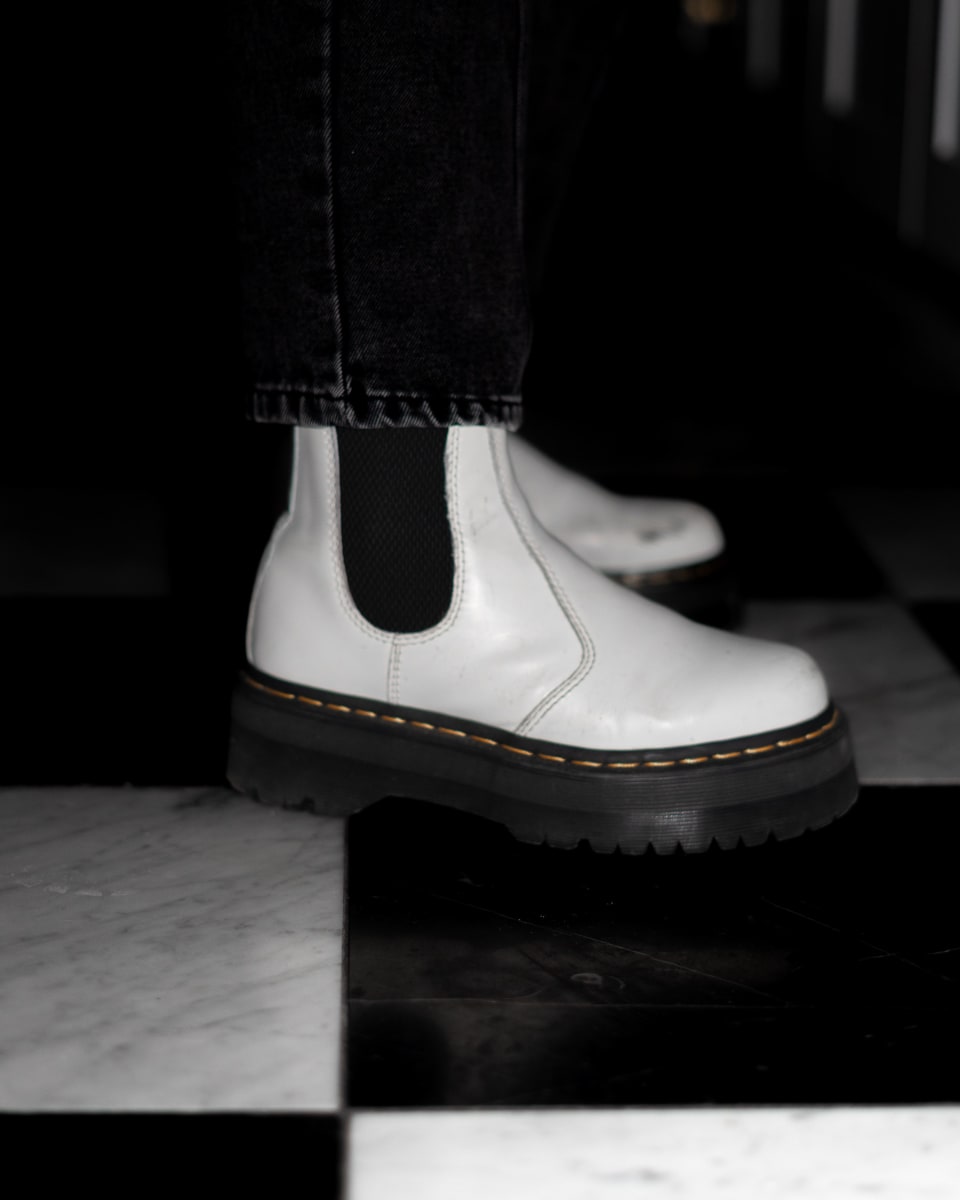
Chelsea boots
Chelsea boots are classic ankle boots with a characteristic construction: a one-piece top with no laces or fastenings, two elastic gussets on the sides that allow them to be pulled on easily, and a loop at the back. Created in the Victorian era (the design is credited to Queen Victoria's shoemaker Joseph Sparkes Hall, who claimed she wore them daily), they gained cult status in the 1960s, when they were worn by the fashionable set of London's Chelsea district and by The Beatles. Chelsea boots have a clean, spare yet elegant silhouette without excess detail, so they balance easily between the formal and the relaxed. They are worn both with a suit and with denim. Classically they are made of leather or suede with a low heel. It is timeless, versatile and stylish footwear — one of the smartest choices for the men's and women's wardrobe.
Chukka boots
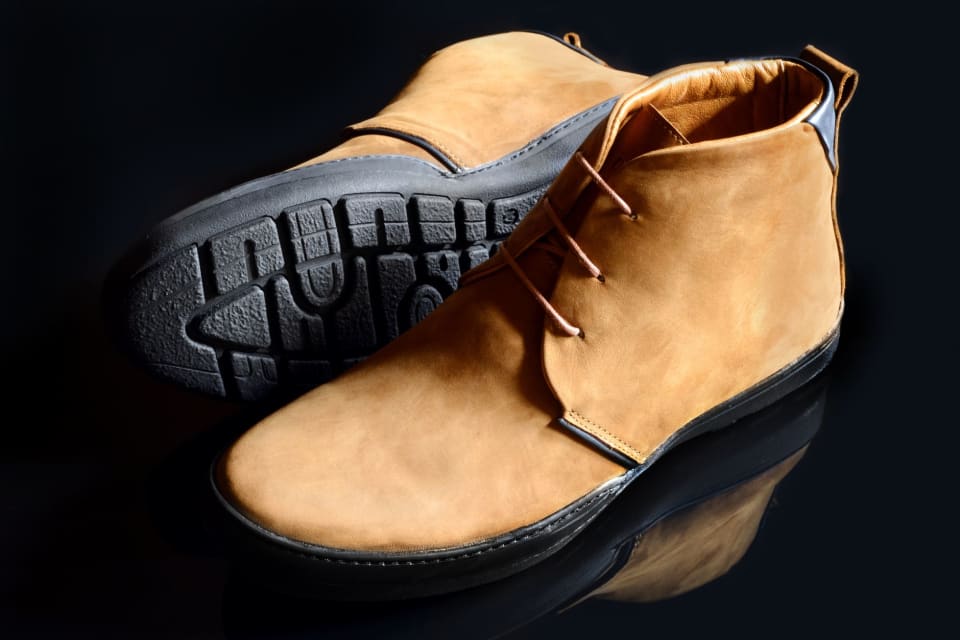
Chukka boots are light ankle boots with open lacing of just two or three pairs of eyelets, usually of suede or smooth leather on a thin sole. It is one of the most versatile and spare styles of men's (and women's) footwear: chukkas are tidy enough for a smart-casual look with chinos, but also relaxed with denim. The name, by one account, is linked to the game of polo (a chukka is a period of a match). The minimalist, clean silhouette without excess detail makes them timeless. They are often confused with desert boots, but chukka is a broader concept. Chukka boots are spare ankle boots with short lacing, in which a clean, minimalist silhouette combines neatness and ease, making them one of the most versatile styles for smart-casual and everyday looks.
Combat boots
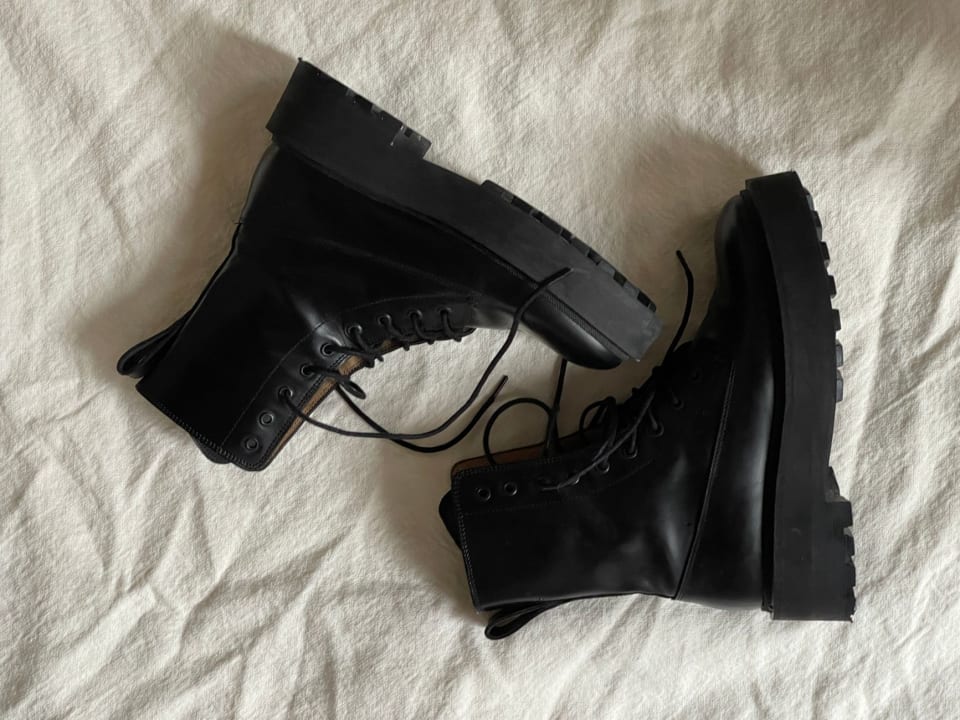
Combat boots are heavy, sturdy lace-up boots with a high shaft to the ankle or above, a thick treaded sole and reinforced construction, made on the model of military footwear. Historically meant for endurance and protection in the field, combat boots passed into fashion as a powerful symbol of rebellion, strength and independence. They were loved by punk, grunge, gothic and rock subcultures, and today they are a versatile item of the street wardrobe that adds a note of audacity and character even to a feminine look. Classic black leather lace-up combat boots are a timeless staple. Combat boots are heavy, sturdy lace-up army boots, in which military endurance and protection combine with a powerful symbolism of rebellion and strength that made them cult footwear of punk, grunge and rock aesthetics and a versatile accent of street style.
Cowboy boots
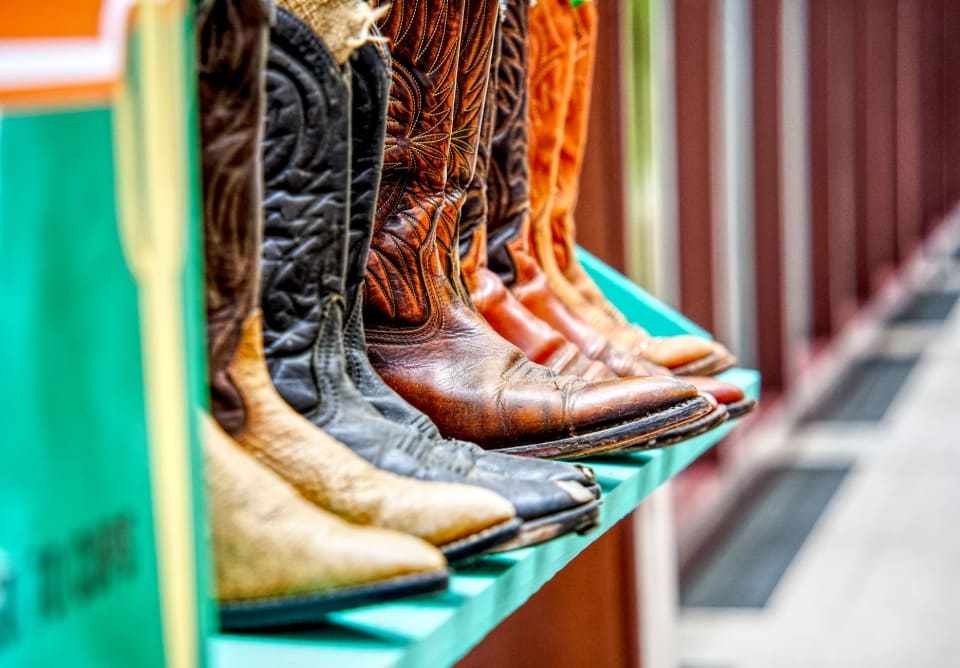
Cowboy boots are characteristic boots with a high shaft, a pointed or slanted toe, a slanted 'Cuban' heel and traditional decorative stitching. Born as practical workwear for American cowboys (the shaft and heel helped hold the stirrup), they became a cult symbol of the western style and the American mythology of the frontier. Cowboy boots are made of leather (often exotic), with rich embossing and stitching. Returning to fashion cyclically, they add a characteristic, slightly rebellious and 'adventurous' energy to a look. Cowboy boots are characteristic western footwear with a high shaft, a slanted heel and decorative stitching, in which practical cowboy roots combine with the cult symbolism of the frontier, giving a look a recognisable, slightly rebellious and adventurous energy.
Desert boots
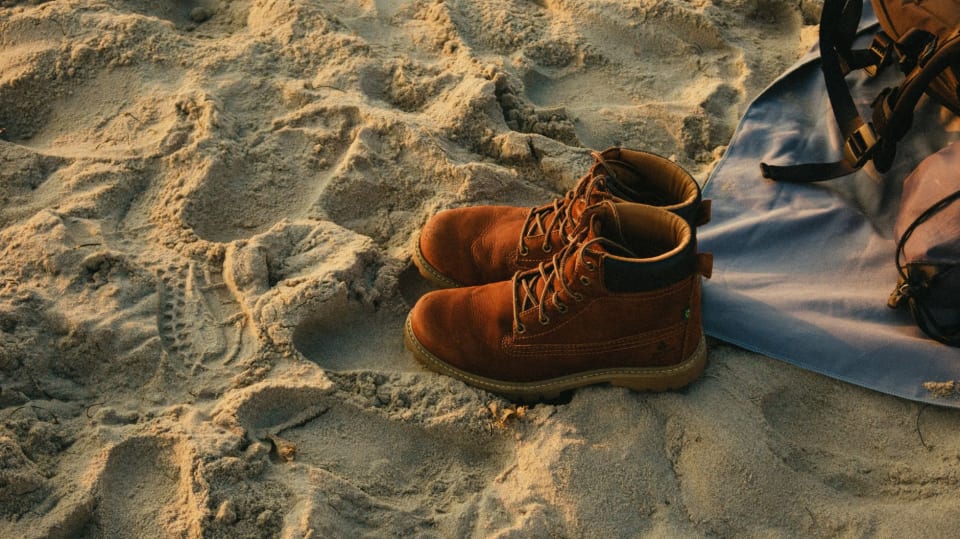
Desert boots are a kind of chukka boot, classically made of suede on a soft, flexible rubber (crepe) sole. They were invented and popularised by Nathan Clark (the Clarks brand) in the 1950s, inspired by the footwear of British soldiers in North Africa — hence the name 'desert boots'. Desert boots combine a relaxed, slightly retro character with unrivalled comfort thanks to the soft sole. The classic sand colour of the suede is their signature. It is a cult item of the everyday wardrobe that goes perfectly with denim, chinos and casual looks. Desert boots are suede chukka boots on a soft rubber sole with military-desert roots, in which a relaxed retro character combines with exceptional comfort, making them a cult, versatile item of the everyday wardrobe.

Riding boots
Riding boots are high, knee-length boots of smooth leather, classically black or dark brown, with a flat sole, low heel and a clean, elegant line without excess décor. Born as functional footwear for riders (protection of the leg, comfort in the stirrup), they became a symbol of aristocratic, 'equestrian' chic and the English country style. Their silhouette is trim, noble and timeless. In civilian fashion riding boots are worn with jeans, leggings, dresses and coats, adding elegant restraint to a look. Riding boots are high knee-length leather boots with a flat sole and a clean line, in which functional equestrian roots combine with an aristocratic, timeless chic that makes them a symbol of the elegant English country style.

Ugg boots
Ugg boots are soft sheepskin (mouton) boots with the fleece turned inward, named after the Australian and New Zealand word ugg, whose origin is unclear (maker Frank Mortel claims he coined it in 1958 from 'ugly'). They were worn by Australian farmers and surfers to keep their feet warm, and in the early 2000s they turned into a worldwide fashion phenomenon. The chief appeal of uggs is their exceptional warmth and softness: natural sheep's fleece warms, breathes and wraps the foot in a feeling of homely cosiness. It is heelless footwear, with a wide flat sole and a shapeless, 'fluffy' silhouette, created purely for comfort rather than strict aesthetics. Uggs are a symbol of the cold season, homely warmth and a relaxed, casual style. They are loved for what some criticise: for the complete triumph of comfort over formality. They are the embodiment of warm, cosy relaxation.

Wellington boots
Wellington boots (wellies) are waterproof boots of rubber or synthetic rubber, made to protect the legs from water, mud and bad weather. Their English name comes from the Duke of Wellington, who popularised their leather prototype. Wellington boots are entirely practical: rain, puddles and garden work hold no fear in them. From purely utilitarian footwear they turned into a fashion accessory too — bright, colourful wellies became a symbol of a rainy day, festivals (recall Glastonbury) and casual outdoor style. They are made in various heights and colours. Wellington boots are waterproof footwear for bad weather, in which purely utilitarian protection from water and mud combines with a modern fashion reading that made bright wellies a symbol of a rainy day, festivals and relaxed outdoor style.
Other Fashion Dimensions
Continue Exploring
Related sections




