



VELVETEEN
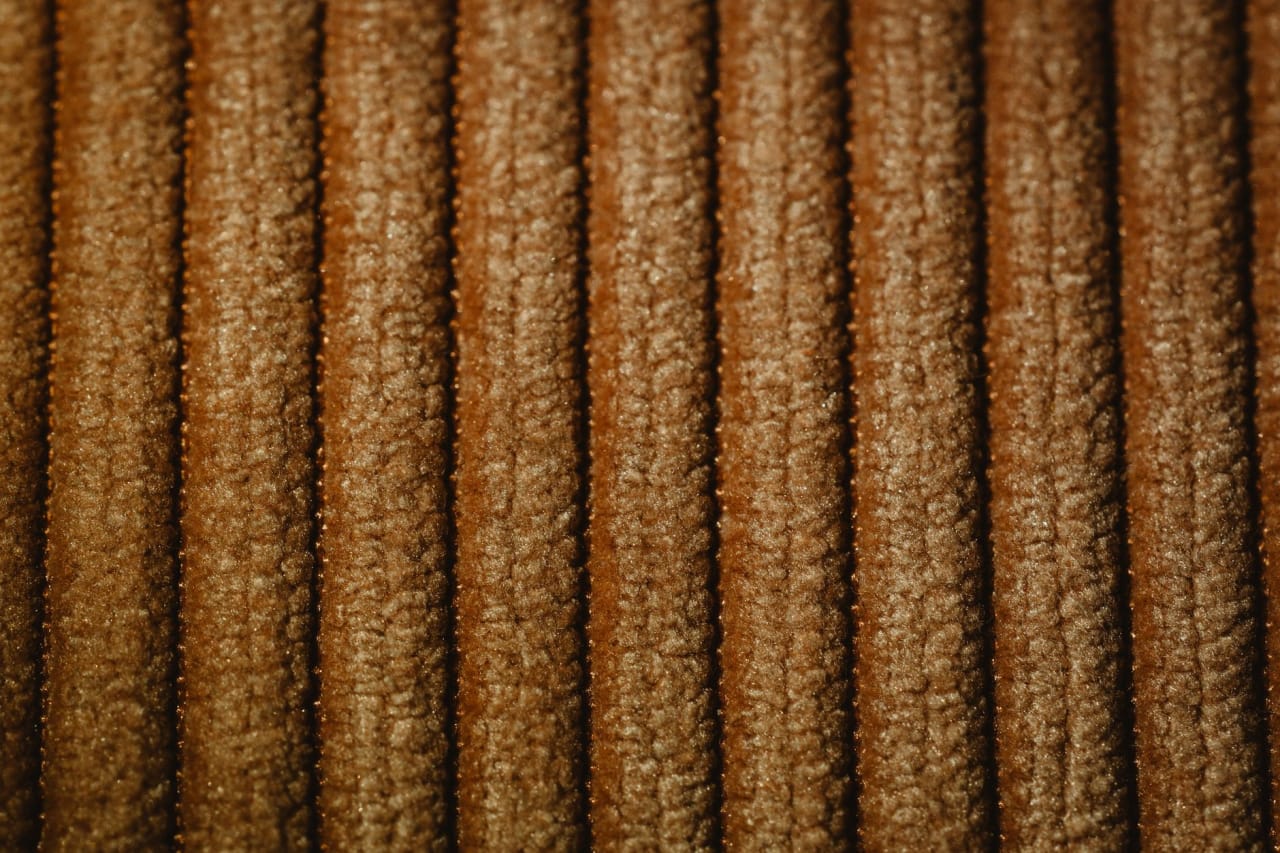
Velveteen is a dense cotton fabric with a short, thick pile that imitates the luxury of velvet but is far more practical and affordable. Unlike velvet, with its longer silk pile, velveteen has a shorter, even cotton pile, so it is more matte, more wear-resistant and less capricious to care for. The fabric is pleasant to the touch, holds its shape well and gives a feeling of warmth and cosiness, so it is used for jackets, dresses, trousers and children's clothing. A close relative of velveteen is ribbed corduroy. Velveteen enjoyed peaks of popularity in 1970s fashion and returns regularly as a symbol of retro cosiness. It is a material that combines the velvety softness of appearance with cotton's easy wear — democratic luxury for every day.
Velveteen (or velveret) is a woven fabric with a dense, even, short pile, usually of cotton or a cotton-silk blend.
What sets it apart from velvet is above all how the pile is made: in velveteen it is cut from the weft threads, in velvet from the warp threads. Velveteen also has a shorter pile than velvet, less sheen, and is stiffer, with less drape.
It is therefore used for upholstery and, in fashion, for garments that need stiffness, structure or durability. Some velveteens are a kind of fustian, with ribs of pile alternating with plain depressions.
Historically, demand for velveteen rose and fell with the fashions that governed the production of velvet.
Compare “Velveteen” with another term
Meaning, origins and distinction — side by side.
Distinction
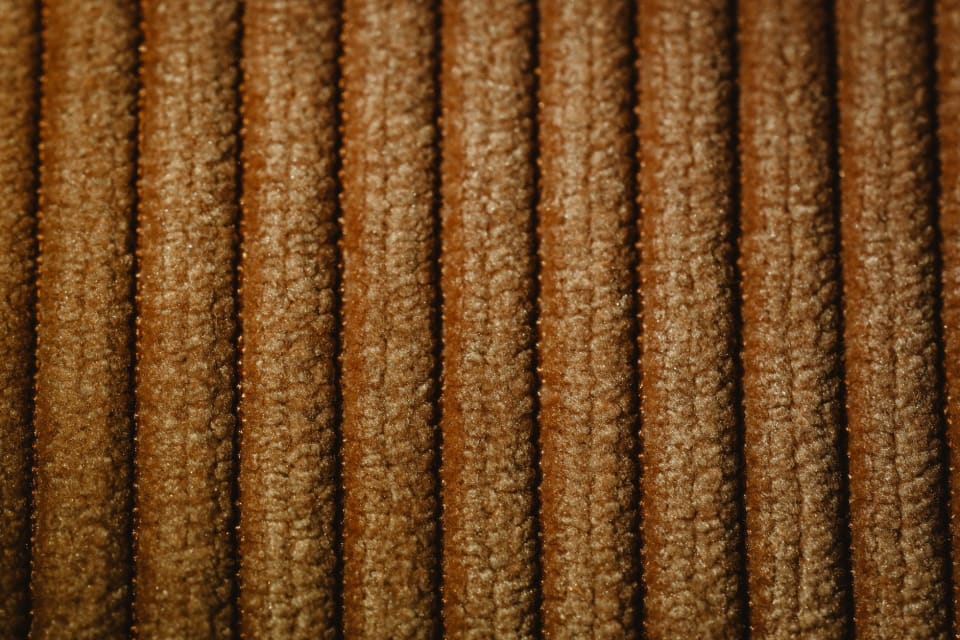
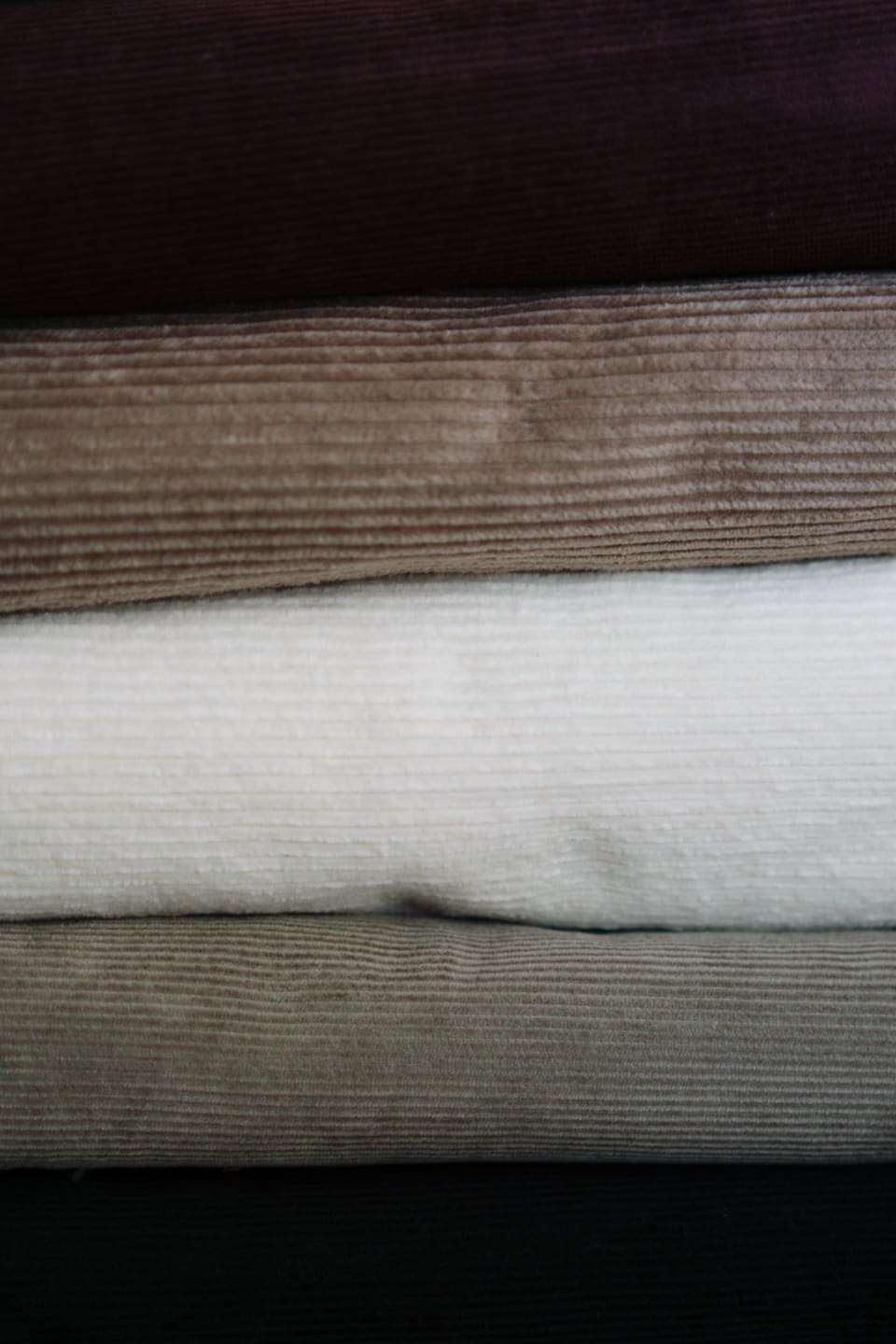
Pile fabrics that are easily confused. Velvet is the classic warp-pile textile, historically silk, deep and lustrous, catching light with a shifting sheen and a luxurious drape. Velveteen is a cotton imitation with a shorter, denser weft-pile: more matte, cheaper and hard-wearing, without velvet's directional shimmer. Velvet belongs to evening and ceremony; velveteen to everyday, practical wear.




