



SCREEN PRINTING
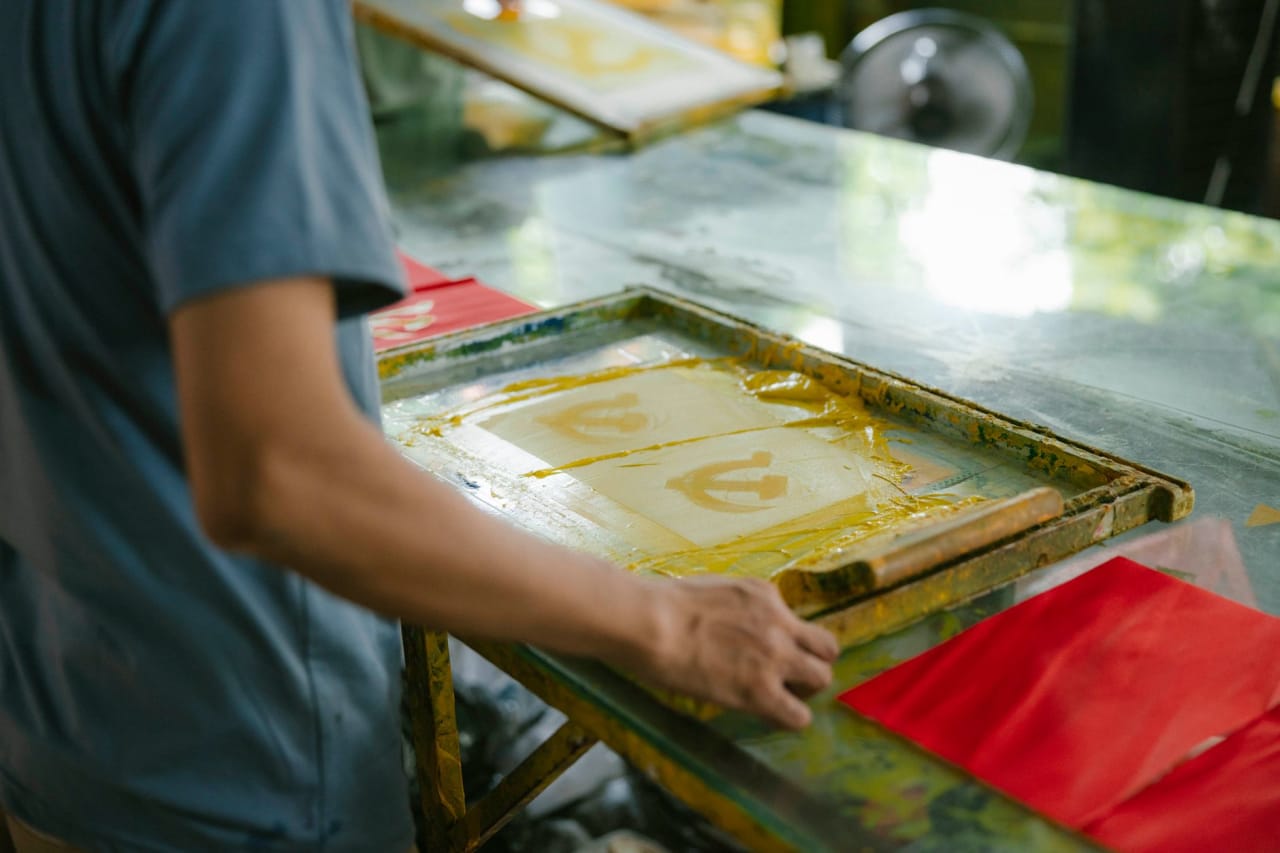
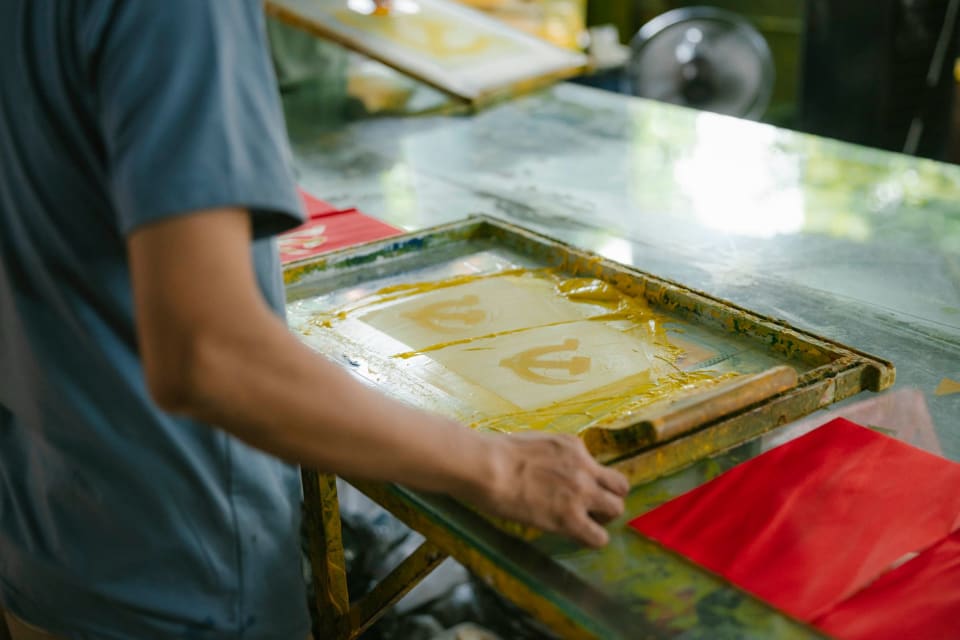
Screen printing (stencil printing) is a technique of applying an image to fabric, in which ink is pushed through a fine mesh stencil where the unneeded areas are blocked and the pattern stays open. A separate stencil is made for each colour, so the ink lies in a dense, saturated and durable layer. Historically the technique descends from ancient stencil printing (silk screens), and in the 20th century it was made famous by pop art (recall Andy Warhol). Screen printing is the basis of the mass production of T-shirts, hoodies and printed clothing: it gives a bright, wash-resistant result and is cost-effective in large runs. For complex multicoloured images, precision in registering the stencils is needed. Screen printing is a technique of dense, saturated printing, in which pushing ink through a stencil creates bright, durable images on fabric that combine graphic expressiveness with suitability for mass production.
Compare “Screen printing” with another term
Meaning, origins and distinction — side by side.
Distinction
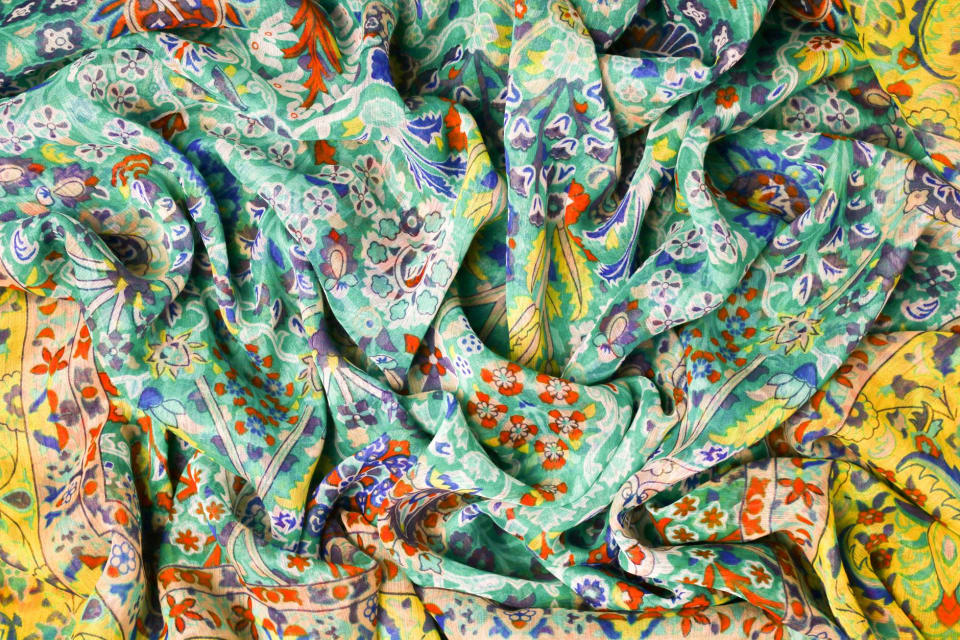
Two technologies for putting an image onto fabric. Screen printing forces ink through a stencil mesh, one screen per colour: the result is saturated, dense and durable, but the method needs prepared stencils and pays off on large runs. Digital printing jets the image straight from a file, with no stencils: it allows photographic detail and an unlimited palette, ideal for complex artwork and small batches.




