



PLEATING
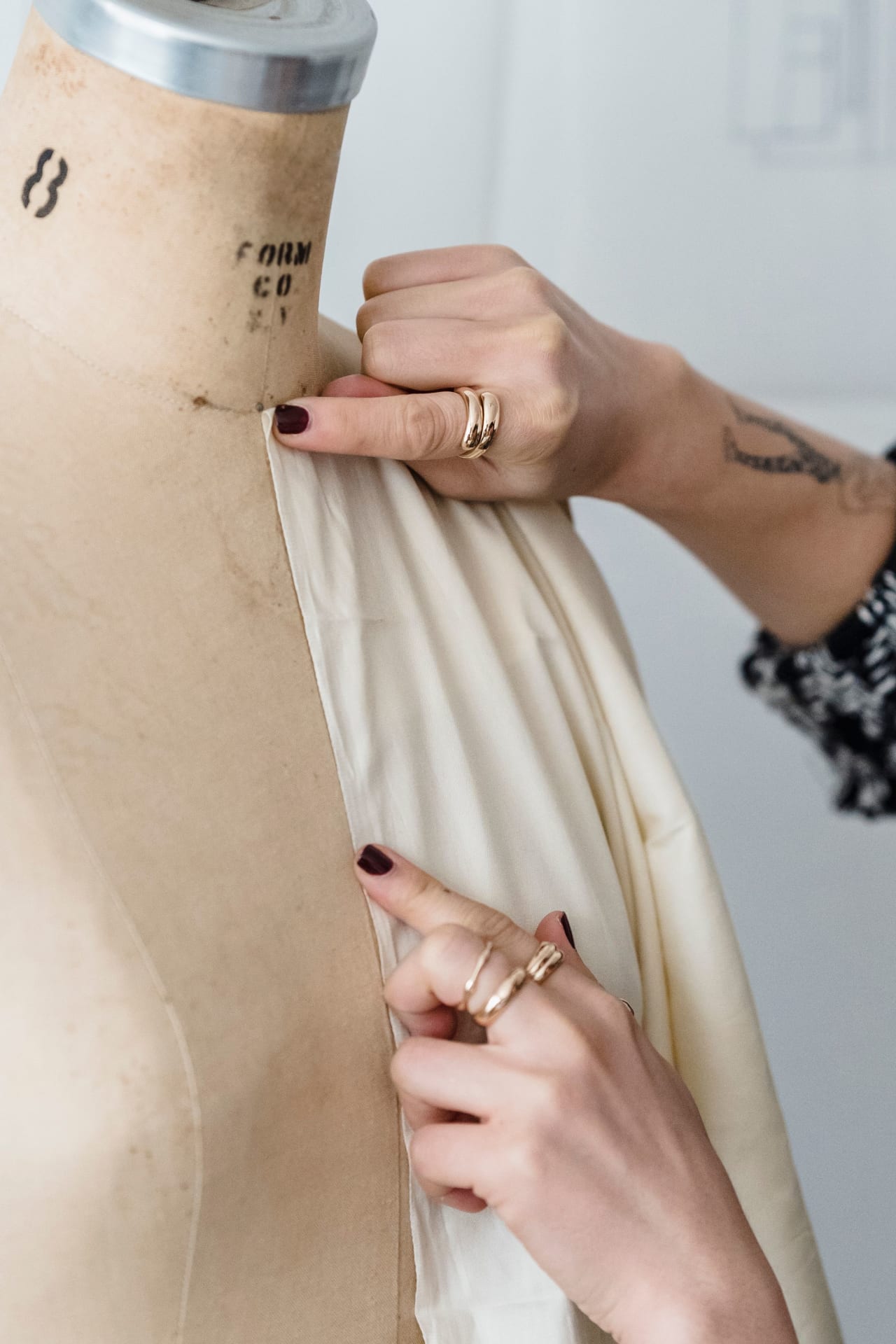
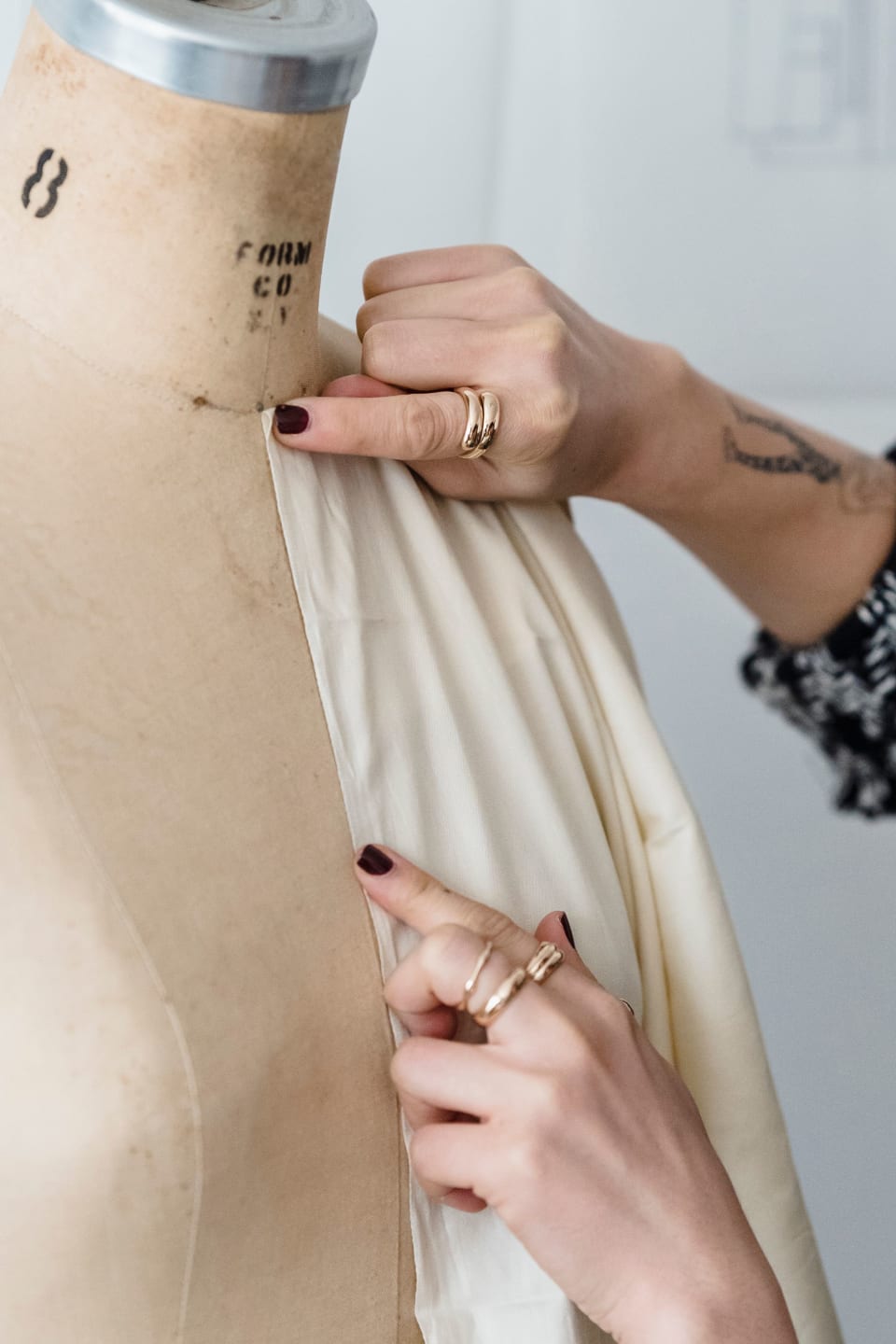
Pleating is a technique of creating even, lasting folds ('pleats') in fabric, which are set and fixed with heat, steam and pressing. Unlike ordinary folds, pleats hold for a long time and recover their shape, giving the cloth a rhythmic, accordion-like texture that moves beautifully and plays with light. The classic example is pleated skirts and dresses; Henriette Negrin and Mariano Fortuny (Delphos gown, c. 1907) added world fame to the technique with their legendary pleated silks. Pleating gives volume without weight, visual slenderness and dramatic movement. The fabric for lasting pleats is usually synthetic or specially treated, because natural fibres 'remember' a fold less well.
Compare “Pleating” with another term
Meaning, origins and distinction — side by side.
Distinction
Two techniques of folding fabric, with different aims. Pleating forms even, crisp, fixed folds across the width of the cloth — decorative or to add volume to skirts, often heat-set. Smocking gathers fabric with decorative stitches into tiny elastic honeycomb pleats that stretch — traditionally on the chest or cuffs of peasant and children's dress. Pleating holds shape; smocking gives stretch and relief.




