



APPLIQUE
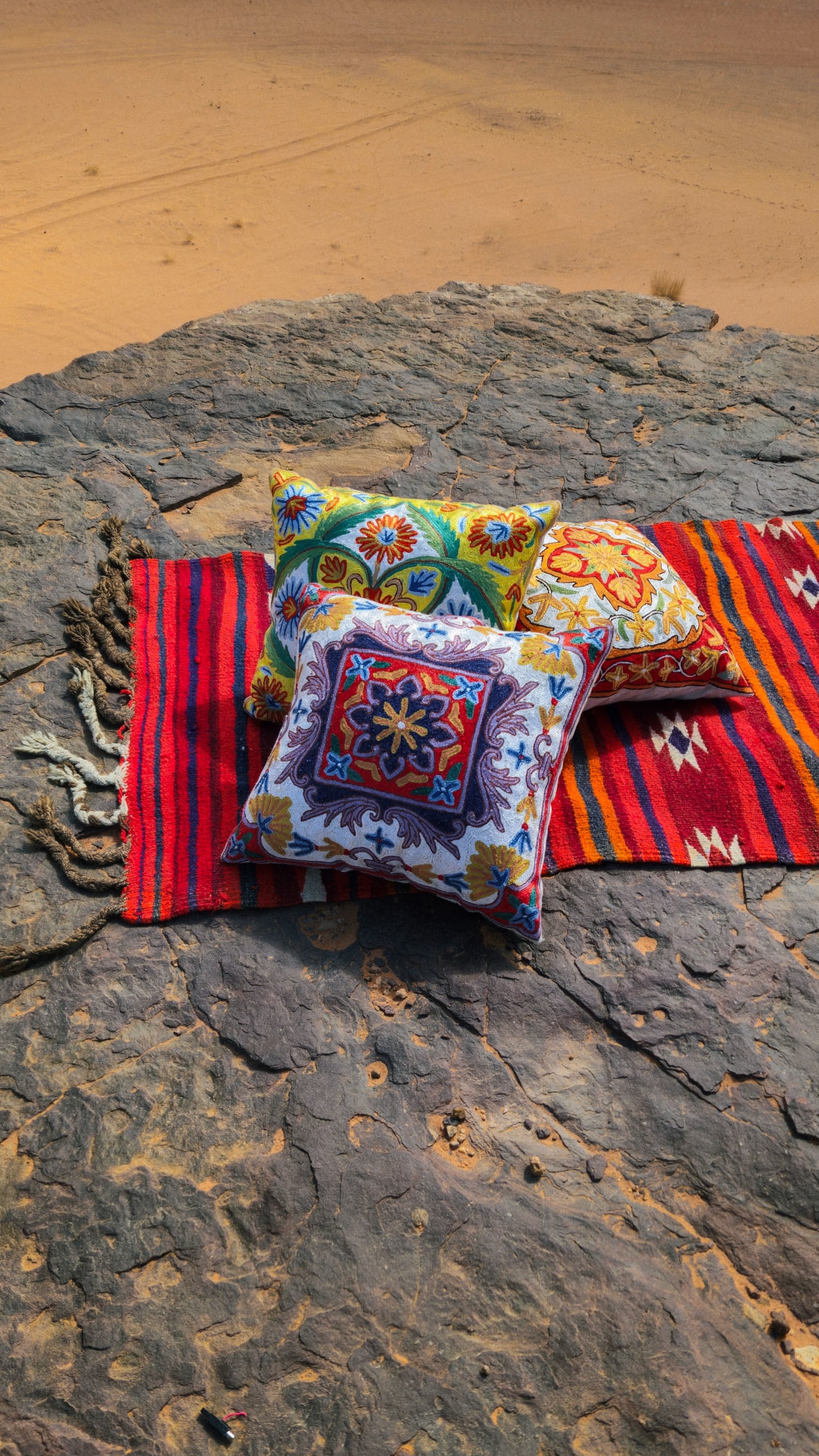
Appliqué is a decorative technique in which shaped pieces of another fabric, leather or material are sewn or glued onto a base cloth, creating a pattern by layering. Unlike thread embroidery, appliqué works with whole pieces, so it yields large, expressive, often contrasting motifs. Its edges are secured by overcasting, a decorative stitch or trim. Appliqué is used both in folk dress (sewn-on coloured inserts on sheepskin coats and waistcoats) and in modern fashion — from children's clothing to couture dresses with flowers and three-dimensional elements. It is a faster way than solid embroidery to add graphic quality, colour and texture to a look.
Compare “Applique” with another term
Meaning, origins and distinction — side by side.
Distinction
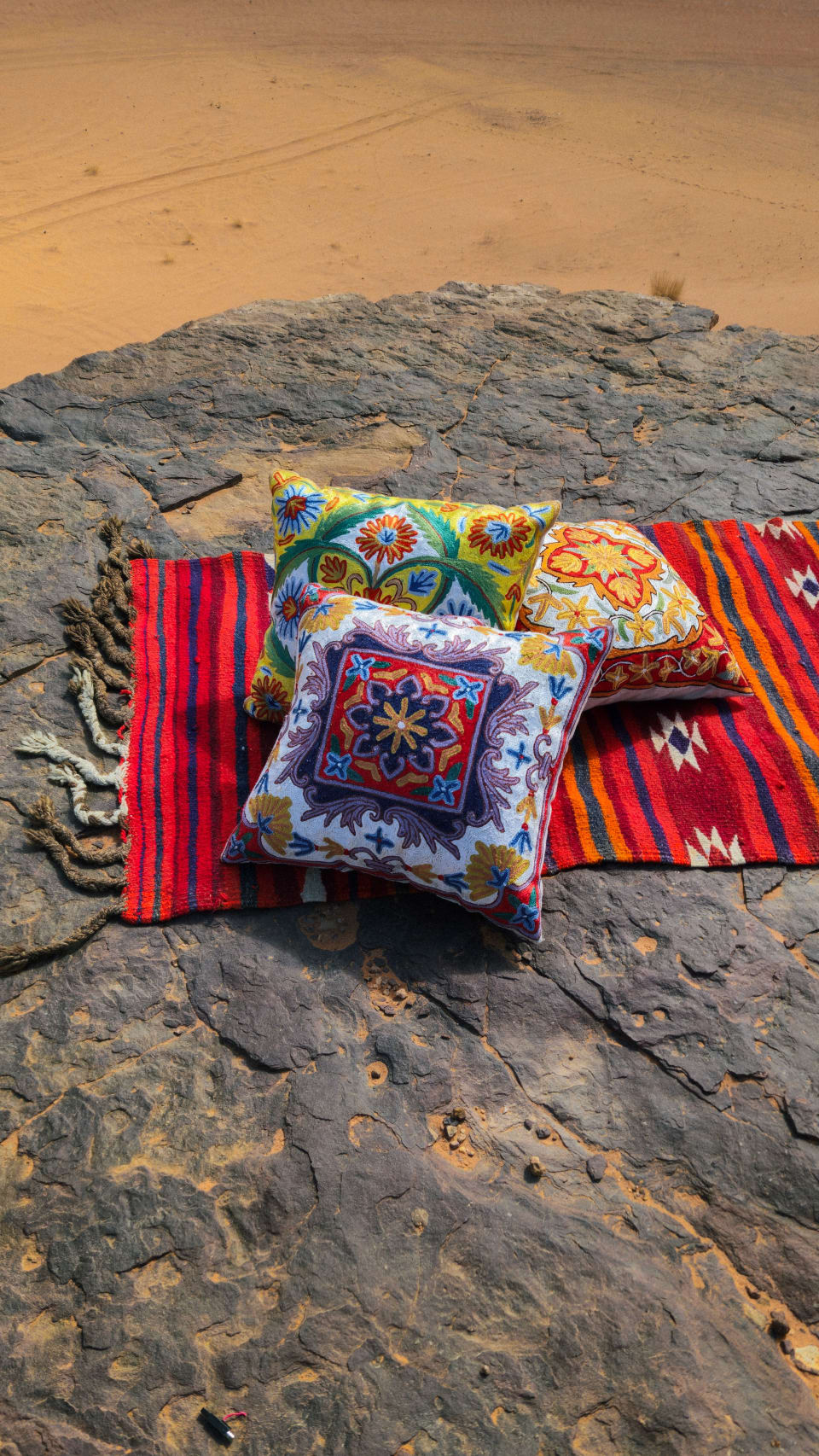
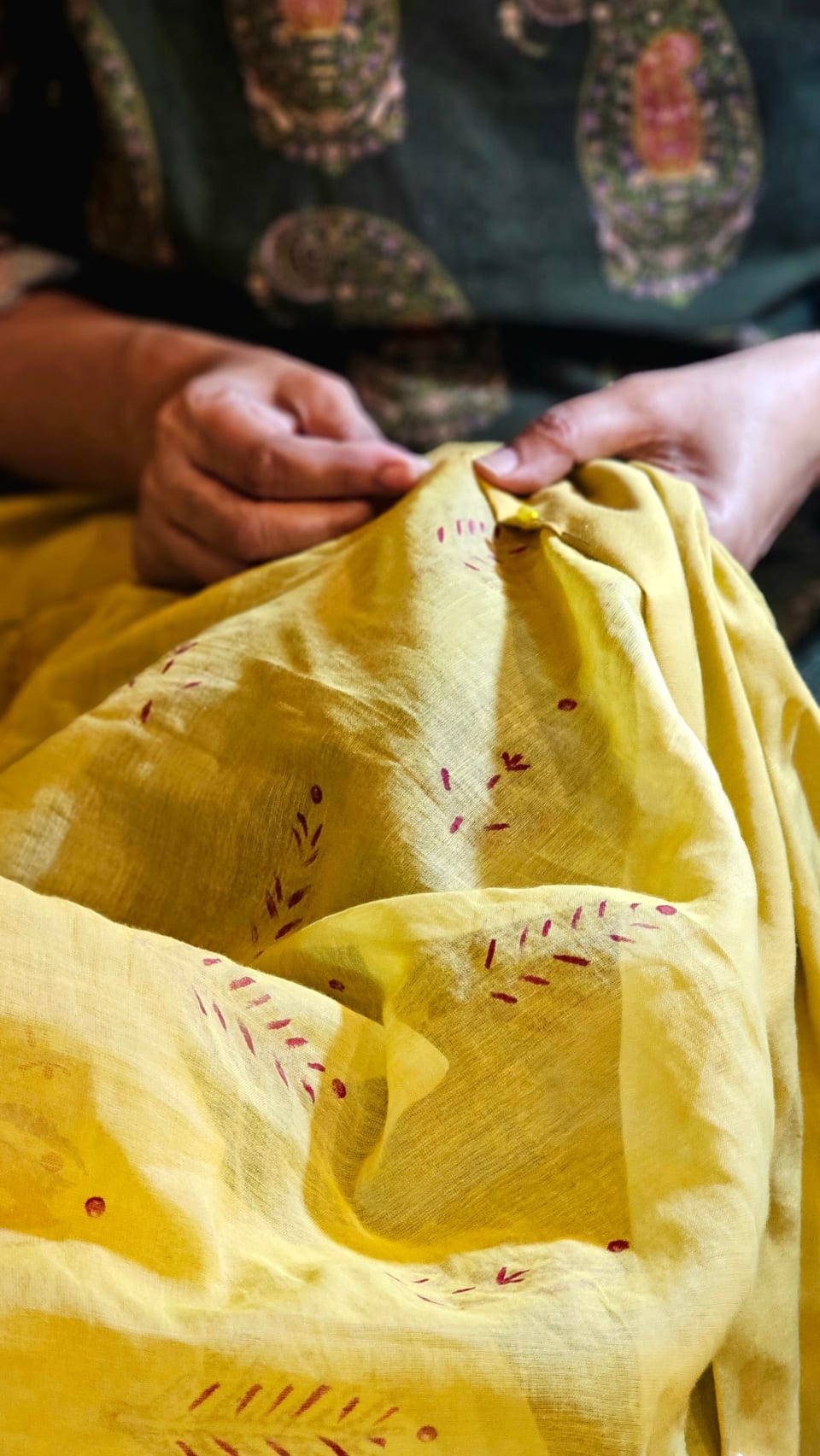
Two fabric-decoration techniques that are easily confused. Embroidery builds a pattern with needle and thread directly on the ground cloth — the motif is formed from stitches of yarn itself. Appliqué sews separate pieces of a second fabric onto the base, finishing their edges; the motif is made of fabric fragments, not thread. Embroidery is about stitch texture; appliqué about layered shapes and cloth contrast.




