


SILVER
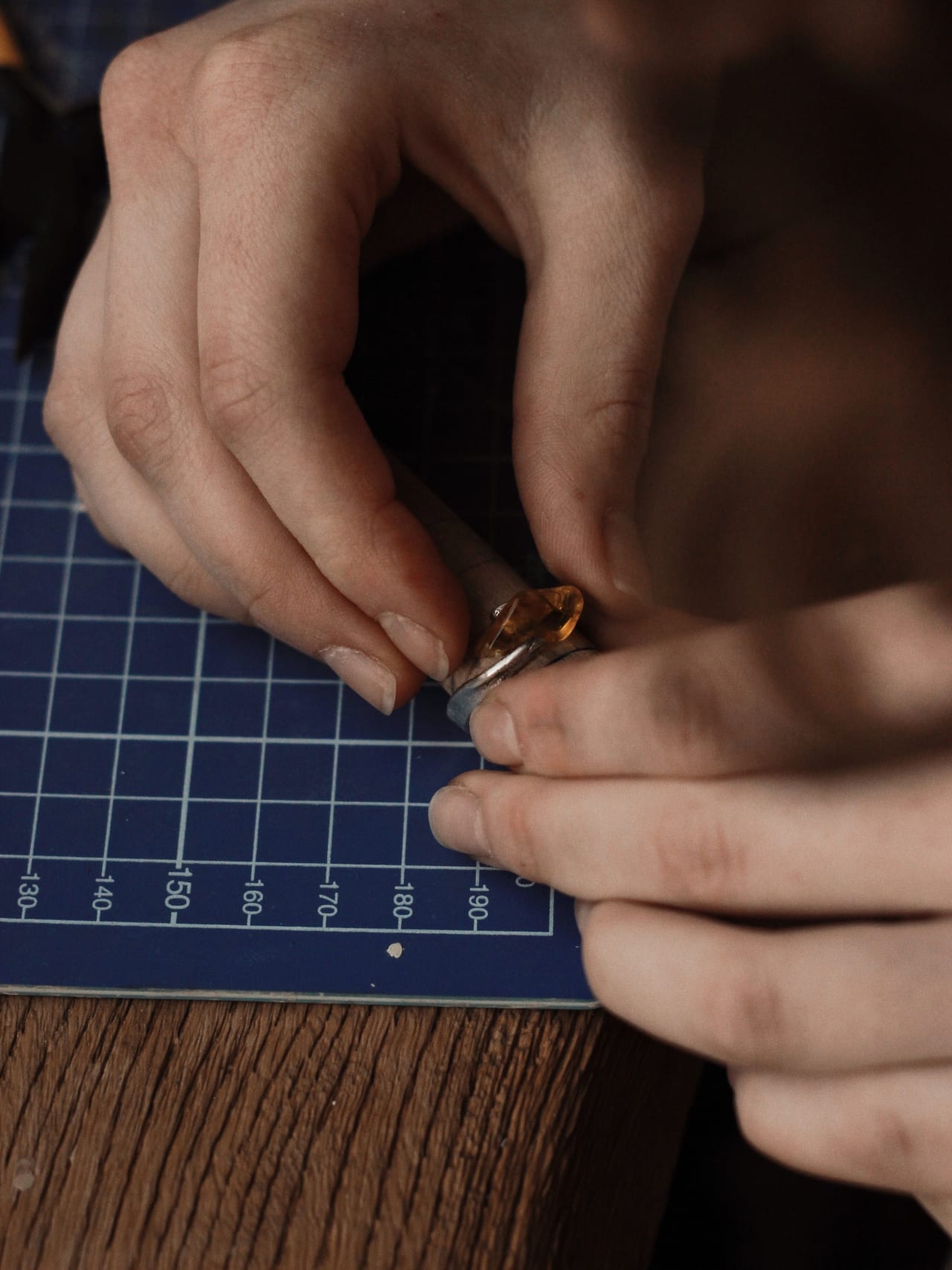
Silver is a noble white metal, one of the chief materials of the jeweller's trade, known to humankind for millennia. It combines a cool silvery-white lustre, high malleability and a more accessible price than gold, and so was long a metal of precious ornaments, tableware and coins alike. Pure silver is too soft, so an alloy is used for pieces (the most common hallmark is 925, 'sterling silver'). Silver tarnishes over time, taking on a patina — but this very ability to darken in the recesses makes relief and niello especially expressive, so blackening (oxidising) became a distinct artistic technique. In Ukrainian tradition silver ornaments, buttons and trimmings had both a decorative and a talismanic meaning. Silver symbolises purity, the moon and noble restraint. It is a metal of refined, 'cool' beauty, accessible yet timelessly elegant.
Silver has deep roots in Ukrainian folk culture. Silver cross, dukats, gerdan necklaces, woven collars — integral elements of traditional women's jewelry, especially among Hutsuls and Lemkos. Silver was considered protection against dark forces, a symbol of moon and feminine essence.
Silver jewelry hallmarks: 875 (European standard), 925 (sterling — world standard), 950 (premium). Contemporary Ukrainian silver jewelers — Pamela Love Ukraine, FORMA, Anna Yolka, KOLO, Oselya, Lustra — combine traditional techniques (granulation, filigree, niello) with contemporary minimalism. Silver as medium suits sculptural forms, graphic lines, and architectural details. Unlike gold, silver has a «cold» aesthetic — more restrained, intellectual, experimental.




