



LACE
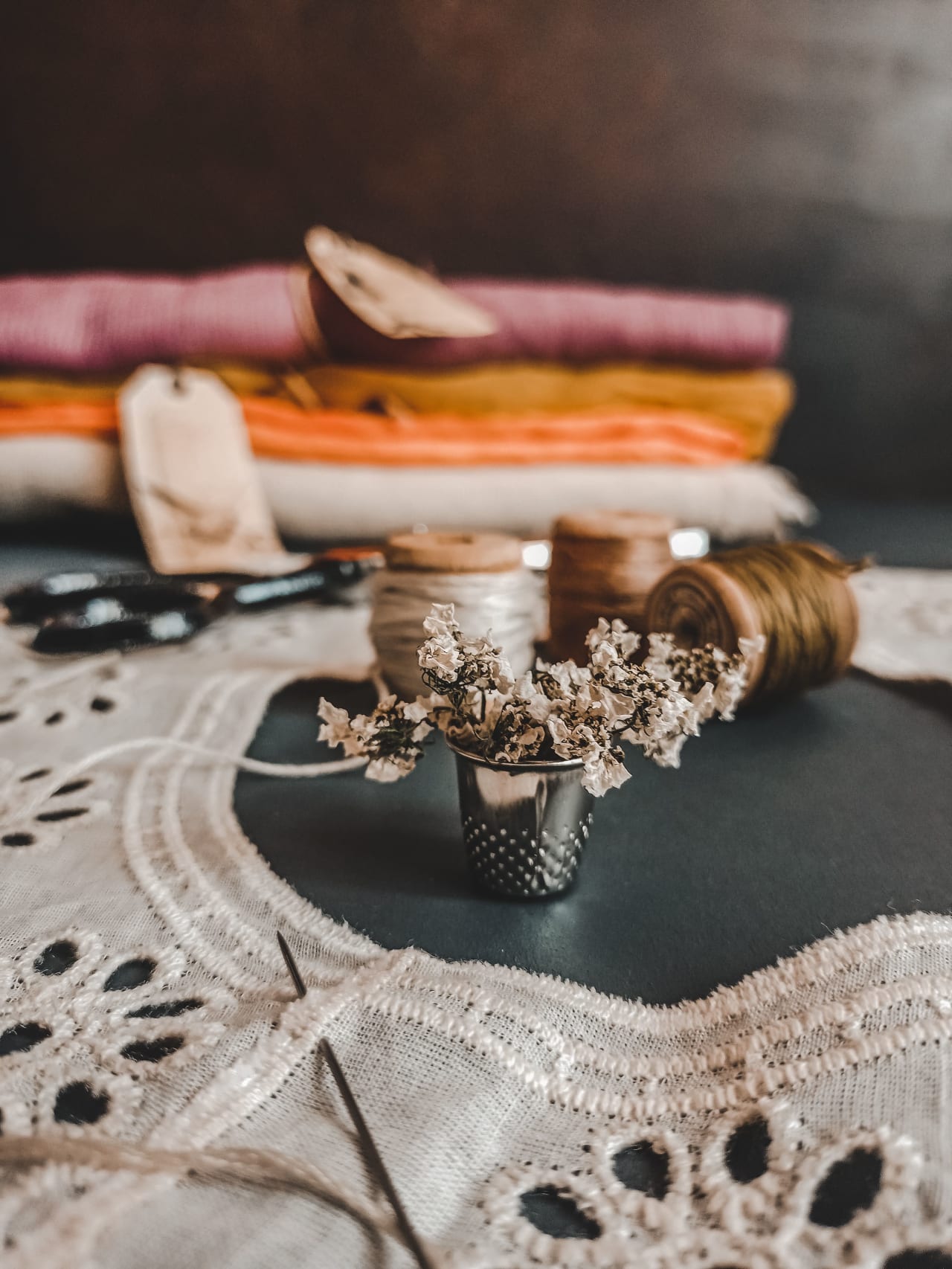
Lace is an openwork textile with an open pattern, formed by interlacing, plaiting or embroidering threads without a solid woven ground. It is a technique and an ornament rather than a 'fabric' in the usual sense. Historically lace was a luxury: hand-made bobbin or needle lace cost a fortune and marked high status. Today machine lace exists alongside the hand-made kind. It is used in bridal and eveningwear, lingerie, blouses and trims whenever sheer, romantic delicacy is wanted. Lace is fragile, snags easily and demands very careful handling.
Lace is an openwork textile with an open pattern, formed by interlacing, plaiting or embroidering threads without a solid woven ground. It is a technique and an ornament rather than a 'fabric' in the usual sense. Historically lace was a luxury: hand-made bobbin or needle lace cost a fortune and marked high status. Today machine lace exists alongside the hand-made kind. It is used in bridal and eveningwear, lingerie, blouses and trims whenever sheer, romantic delicacy is wanted. Lace is fragile, snags easily and demands very careful handling. The classic French laces — needle-made Alençon and bobbin-made Chantilly — were historically prized like jewels.




